

Gurnee Homeowner Resource
New Homeowner's Guide to Lawn and Yard Maintenance in Gurnee
If you just bought a home in Gurnee, do not start by buying fertilizer, weed killer, grass seed, and every lawn tool at the hardware store. Spend the first few weeks learning how the property behaves. Find the wet areas, dry areas, shade, sprinkler coverage, drainage paths, lawn density, tree competition, and local rules first. Then build the maintenance plan around the property you actually own.
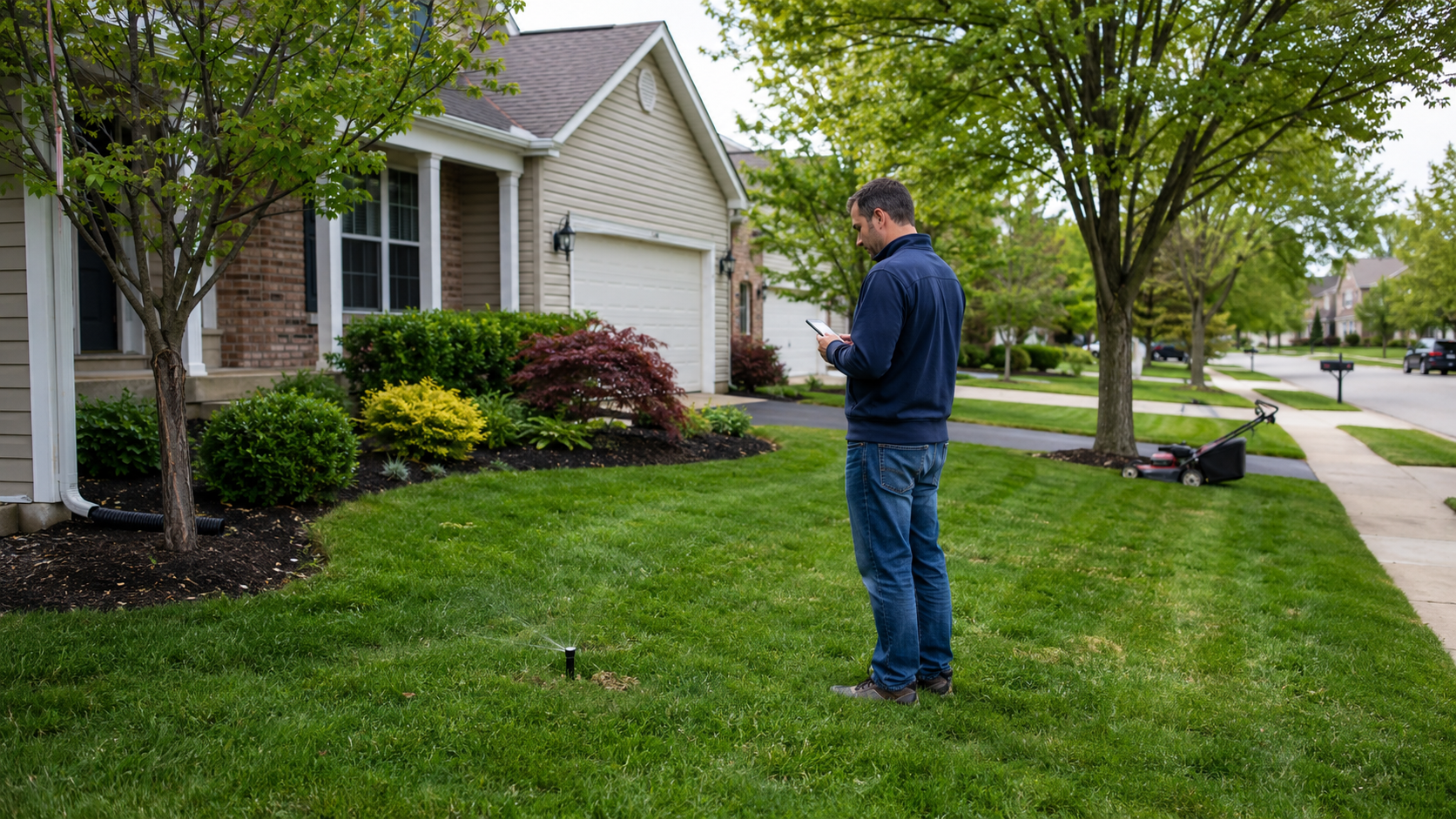
A new yard comes with a history you usually do not know. The previous owner may have irrigated heavily, barely watered, fertilized four times a year, never aerated, replaced sections of sod, ignored drainage, or maintained everything professionally. The lawn can look good on closing day while still having problems that appear later.
Your first goal is not perfection. Your first goal is understanding the site well enough to avoid creating problems through unnecessary treatments.
First 7 Days
What Should You Inspect During the First Week?
Walk the property before changing anything. Take photos and notes. You are trying to establish a baseline.
- Locate the approximate property boundaries and any visible utility, drainage, or access easements.
- Identify every downspout and where each one discharges.
- Find the sump pump discharge outlet if the home has one.
- Locate sprinkler heads, valve boxes, and controller zones if irrigation is installed.
- Look for low areas, standing water, erosion, and obvious drainage swales.
- Inspect lawn density rather than just color.
- Note areas under mature trees where turf is thin.
- Look for buried or partially hidden landscape edging, drains, cleanouts, lighting wires, and invisible fence markers.
- Check gate width and access if you plan to use larger lawn equipment or hire a service.
- Find out whether your waste service is directly through the Village contract or handled through an HOA.
A property can look neglected for reasons that are easy to fix, or it can look healthy while hiding drainage, soil, shade, or irrigation problems. Observe before spending money.
First 30 Days
What Should You Learn During the First Month?
The first month should tell you how the yard responds to normal weather and maintenance.
Where does water move?
Watch the property during an actual rainstorm. Note downspout flow, puddles, swales, water entering from neighboring areas, and where water exits.
Which areas receive full sun?
Turf under mature trees or on the north side of structures can behave very differently from open sunny lawn.
Does every zone cover evenly?
Run each sprinkler zone and look for broken heads, blocked spray, dry corners, pavement overspray, and poor overlap.
Where is the soil being compacted?
Gate entrances, play areas, narrow side yards, pet routes, and equipment paths often show soil stress before the rest of the lawn.
Routine Maintenance
How Should a New Gurnee Homeowner Mow the Lawn?
Mowing is the maintenance task you will perform most often, so getting it wrong repeatedly matters more than missing one fertilizer application.
University of Illinois Extension emphasizes three core principles: avoid mowing too short, mow frequently enough that no more than one third of the leaf blade is removed at a time, and keep the mower blade sharp.
Illinois Extension pages vary slightly in the exact suggested range depending on the lawn guidance being discussed, with recommendations commonly around 2.5 to 4 inches for cool season turf. The practical lesson is consistent: do not scalp the lawn.
- Increase mowing frequency during rapid spring and fall growth.
- Slow down mowing frequency when summer growth slows.
- Do not lower the deck simply because the grass is growing more slowly.
- Leave clippings when they are short and disperse evenly.
- Remove or redistribute clumps that are thick enough to smother turf.
- Sharpen blades rather than accepting torn, frayed leaf tips.
Year Round Timing
Use the Gurnee Lawn Care Calendar
My month by month Gurnee guide organizes mowing, watering, fertilizing, aeration, overseeding, and fall cleanup around the Northern Illinois season.
Read the Gurnee lawn care calendar →Water
How Should You Water a Lawn in Gurnee?
Established turf should generally be watered deeply and less frequently rather than receiving shallow daily watering. University of Illinois Extension gives about 1 to 1.5 inches of total water per week as a general guideline for maintaining actively growing green cool season turf. Rainfall counts toward that total.
You also need to decide whether you intend to maintain green active turf throughout summer or allow the lawn to enter dormancy during hot, dry periods. Illinois Extension recommends avoiding repeated cycles where the lawn becomes fully dormant, is watered enough to force green growth, and then is allowed to become dormant again.
Gurnee's seasonal watering restrictions
The Village's annual restrictions run from May 15 through September 15. Even numbered addresses water on even numbered days. Odd numbered addresses water on odd numbered days. Sprinkling is permitted between 6:00 p.m. and 10:00 a.m., and lawn sprinkling between 10:00 a.m. and 6:00 p.m. is prohibited.
Hand held watering is allowed at any time. Newly seeded or sodded yards may qualify for a special 14 consecutive day watering permit during the permitted hours.
Local Rule
Gurnee Lawn Watering Restrictions
Before setting an irrigation controller, read the full local watering guide so your schedule complies with the Village rules.
Read the Gurnee watering guide →Fertilizer
How Much Fertilizer Does a New Lawn Actually Need?
There is no rule that every residential lawn needs the same four or five fertilizer applications.
Illinois Extension organizes fertilizer frequency around the lawn density a homeowner wants. A lower input lawn may receive one late summer to early fall application. Higher density lawns can receive additional applications.
For Northern Illinois, Extension identifies August as an important late summer to early fall fertilizer period and late October to early November as the late season period. It also warns against excessive nitrogen because too much can increase top growth, disease, and insect problems.
Shade, compaction, drainage, irrigation failure, insects, disease, and poor soil structure are not corrected simply by adding nitrogen.
Weeds
What Should a New Homeowner Do About Lawn Weeds?
First decide what level of weed presence bothers you. Illinois Extension explicitly notes that lawn quality is subjective and that homeowners can choose different levels of inputs and biodiversity.
A few dandelions do not mean the lawn needs a full renovation. Repeated weed invasion often points to an underlying weakness such as mowing too short, thin turf, compacted soil, low fertility, shade, or disturbed soil.
- Identify the weed before choosing a control.
- Correct mowing and turf density problems that leave open soil.
- Hand pull manageable broadleaf weeds when practical.
- Follow pesticide labels exactly if herbicides are used.
- Do not apply a product simply because the front of the bag says “weed control.”
Summer Stress
What If the Lawn Turns Brown During the First Summer?
Do not assume it is dead.
Cool season turf naturally slows and can go dormant during hot, dry weather. Brown areas can also indicate irrigation gaps, mowing stress, compacted soil, disease, grubs, or site conditions.
The pattern matters. Uniform fading during prolonged heat looks different from a perfect dry arc caused by a sprinkler problem or turf that pulls loose because roots have been eaten by grubs.
Diagnosis Before Treatment
Why Gurnee Lawns Turn Brown During Summer
This guide separates dormancy, drought, irrigation problems, mowing stress, disease, grubs, compaction, and shade so you can identify the likely cause first.
Read the summer brown lawn guide →Soil Compaction
Does Every New Homeowner Need to Aerate the Lawn?
No. Core aeration is mainly a soil management practice used to reduce compaction and manage thatch.
University of Illinois Extension recommends hollow tine core aeration when cool season turf is actively growing in spring or fall, with early to mid fall identified as ideal. The soil should be moist enough for the hollow tines to penetrate and remove useful plugs.
Aeration is more justified when high traffic areas feel hard, roots are shallow, sodded turf sits over clay soil, construction compacted the yard, or water has difficulty infiltrating because the upper soil is dense.
Soil Guide
Best Time to Aerate a Lawn in Gurnee
Use the full guide to decide whether your lawn actually needs aeration and when the soil conditions are right.
Read the Gurnee aeration guide →Lawn Repair
When Should a New Gurnee Homeowner Overseed?
Overseed when the lawn needs more grass plants, not simply because fall lawn advertisements say it is time.
University of Illinois Extension identifies early August through early September as the ideal cool season seeding period for Northern Illinois. April is a second choice when late summer seeding is not practical.
Before applying seed, correct the reason the turf became thin. Severe shade, chronic wet soil, poor sprinkler coverage, repeated traffic, disease, and compaction can cause the new grass to fail just like the old grass did.
Repair Guide
Best Time to Overseed a Lawn in Gurnee
The full guide covers seed timing, soil contact, watering, shade, aeration, and the most common reasons overseeding fails.
Read the Gurnee overseeding guide →Fall
How Should a New Homeowner Handle Gurnee's Fall Leaves?
Do not let heavy leaf mats sit over the lawn for long periods. Manageable leaf volume can often be shredded with a mower and recycled into the turf. Excess leaves should be removed when the grass remains buried.
Healthy leaves in garden beds are different. Some can remain as organic material and winter habitat when they are not blocking drainage, smothering sensitive plants, or carrying significant disease.
Gurnee's regular landscape waste collection season runs April 1 through November 30. For 2026, the Village lists a seasonal subscription at $151.42 and individual landscape waste stickers at $3.19. Brush collection takes place weekly from mid April through the end of November and brush must be bundled according to Village requirements.
Local Waste Rules
Gurnee Yard Waste and Leaf Disposal Guide
See the current landscape waste season, subscription and sticker options, brush bundling, burning restrictions, and fall leaf handling.
Read the Gurnee yard waste guide →Seasonal Cleanup
Gurnee Fall Yard Cleanup Guide
This guide explains what should be removed before winter and what healthy plant material can remain until spring.
Read the fall cleanup guide →Water Movement
What Drainage Problems Should a New Homeowner Watch For?
Watch the property during real rainfall before assuming every wet area needs a drain.
Gurnee explains that isolated yard and roadway flooding can occur during major rain events when the stormwater system is overwhelmed, and some swales and roadways are intentionally designed to temporarily hold water to protect homes.
Repeated standing water after ordinary rainfall deserves more investigation. Look at grading, downspouts, sump discharge, compacted soil, drains, swales, hard surfaces, and runoff entering from adjacent property.
Drainage Diagnosis
Gurnee Flooding and Yard Drainage Guide
Use this before paying for a French drain, regrading, or another drainage project.
Read the Gurnee drainage guide →Local Property Rules
What Gurnee Property Maintenance Rules Affect the Yard?
Gurnee's property maintenance program covers several exterior conditions that a new homeowner should know about.
The 8 inch threshold is a code standard, not a recommended mowing height. Routine lawn care should keep turf far below that maximum.
Local Code Guide
Gurnee Property Maintenance Rules for Grass and Landscaping
Read the homeowner version of the grass height, weeds, debris, landscaping, drainage, and right of way rules.
Read the Gurnee property maintenance guide →Before Building or Digging
What Yard Projects May Require Village Approval?
Normal mowing, trimming, hand weeding, and ordinary landscape maintenance are different from construction, grading, irrigation installation, and work in the public right of way.
The Village lists a Clearing and Grading application for qualifying grading work. It also states that work in the public right of way can require a permit, including landscaping, storm drainage, driveway connections, sidewalks, curbs, paving, excavation, and utilities.
Permanent lawn sprinkler systems have their own permit and documentation requirements.
Public right of way can extend beyond the pavement. Confirm boundaries and Village requirements before installing trees, irrigation, edging, drainage, or hardscape near the street.
First Year
What Should a New Gurnee Homeowner Do Each Season?
Simple First Year Plan
Avoid Expensive Mistakes
What Should a New Homeowner Not Do?
- Do not mow the lawn extremely short because it looked long at closing.
- Do not assume every brown area needs more water.
- Do not fertilize simply because the lawn is pale.
- Do not spread grass seed before fixing shade, drainage, irrigation, or compaction problems.
- Do not aerate rock hard dry soil or saturated soil.
- Do not fill a low drainage area until you know whether it is an intentional swale.
- Do not install landscaping in the public right of way without checking Village requirements.
- Do not rely on an old leaf pickup schedule for the current year.
- Do not buy every lawn treatment package without knowing what the lawn actually needs.
Gurnee, Illinois
Your First Year Should Be About Learning the Property
A good maintenance plan becomes easier after you have watched the lawn through spring growth, summer stress, fall recovery, leaf season, freeze up, and at least a few heavy rain events.
By the end of the first year, you should know which areas dry first, which stay wet, where turf struggles under trees, where weeds return, how the sprinkler system covers, and which lawn renovation work is actually worth paying for.
Evo Lawn & Landscape
Residential Lawn Care and Landscaping in Gurnee
I provide residential lawn care and landscape maintenance for Gurnee homeowners who want consistent mowing, seasonal lawn work, cleanup, and property maintenance without guessing at what the yard needs.
New Gurnee Homeowner Questions
New Homeowner Lawn and Yard FAQs
What should I do first after buying a home with a lawn in Gurnee?
Inspect before treating. Locate drainage paths, downspouts, sump discharge, sprinkler zones, shade, thin turf, high traffic areas, property boundaries, and yard waste service before making major lawn or landscape changes.
How short should I mow the lawn?
Avoid close mowing. University of Illinois Extension recommendations for cool season lawns generally fall around 2.5 to 4 inches depending on the specific turf guidance, and Extension consistently recommends removing no more than one third of the leaf blade in one mowing.
How often should I water?
Water based on actual turf and soil need rather than a fixed daily schedule. Established cool season lawns being maintained green generally need about 1 to 1.5 inches of total water per week, including rainfall, with deeper and less frequent irrigation preferred.
What are Gurnee's summer watering restrictions?
Restrictions run from May 15 through September 15. Even numbered addresses water on even days and odd numbered addresses water on odd days between 6:00 p.m. and 10:00 a.m. Lawn sprinkling is prohibited from 10:00 a.m. through 6:00 p.m.
Does every lawn need four fertilizer applications?
No. Illinois Extension offers different fertilization schedules depending on desired lawn density and management level. A lower input lawn may receive only a late summer to early fall application, while high density lawns can receive more applications.
Does every lawn need annual core aeration?
No. Core aeration is most useful where soil compaction, thatch, shallow rooting, heavy traffic, or similar soil limitations are present.
When is the best time to overseed in Gurnee?
University of Illinois Extension identifies early August through early September as the ideal cool season seeding window for Northern Illinois. April is a second choice.
How tall can grass get before it violates Gurnee property maintenance rules?
The Village lists grass or weeds exceeding 8 inches in height as a property maintenance issue. That is a legal threshold, not a recommended mowing height.
When does Gurnee yard waste collection run?
The regular Village landscape waste season currently runs from April 1 through November 30. HOA serviced properties can have different arrangements.
Do I need a permit to change my yard drainage?
Some grading, storm drainage, or right of way work may require Village review or permits. Check Gurnee's current Community Development requirements before major regrading, excavation, or drainage construction.
Bottom Line
Maintain the Basics First, Diagnose Problems Second, Renovate Last
A new Gurnee homeowner does not need to solve every lawn imperfection during the first month. Start with mowing, water management, drainage awareness, yard waste, and local compliance.
Once you have watched the property through changing weather, you can make better decisions about fertilizer, weed control, aeration, overseeding, drainage work, and landscape improvements. The best first year plan is the one based on your actual property rather than a generic lawn treatment schedule.
Primary Sources
Sources Used for This New Homeowner Guide
- Village of Gurnee: Sprinkling Restrictions
- Village of Gurnee: Landscape Waste
- Village of Gurnee: Property Maintenance
- Village of Gurnee: Community Development Permits and Applications
- University of Illinois Extension: Mowing Your Lawn
- University of Illinois Extension: Watering Your Lawn
- University of Illinois Extension: Fertilizing Your Lawn
- University of Illinois Extension: Planting a New Lawn
- University of Illinois Extension: Core Aeration
- University of Illinois Extension: Maintaining Healthy Lawns