

Gurnee Homeowner Resource
Gurnee Lawn Watering Restrictions: What Homeowners Need to Know
From May 15 through September 15, the Village of Gurnee restricts when lawns may be sprinkled. This guide explains the odd and even address schedule, permitted watering hours, the exception for hand held watering, the special permit for new seed or sod, and how to water an established lawn efficiently within the rules.
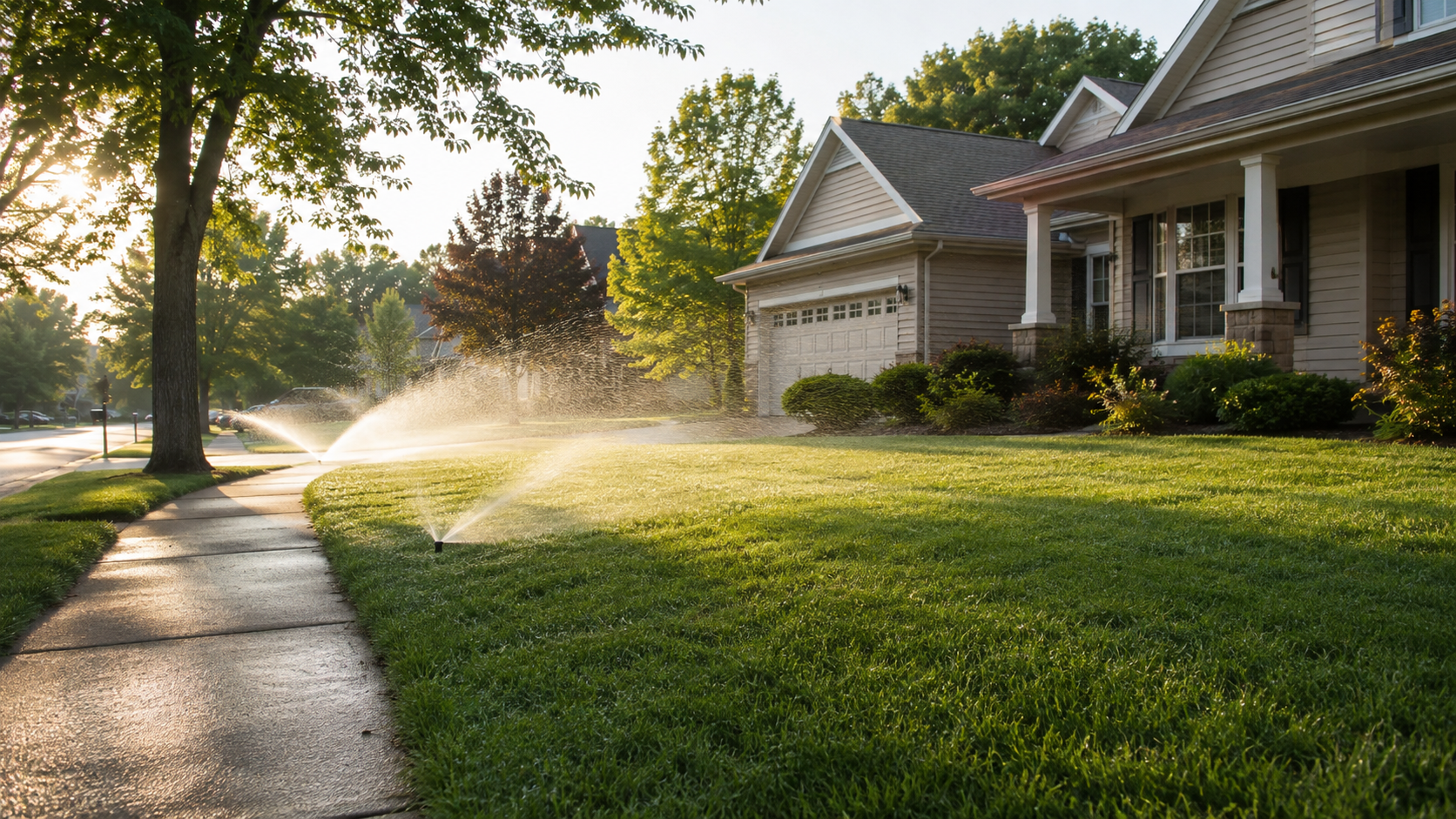
If you live in Gurnee, the first question is not how long to run your sprinkler. It is whether you are allowed to run it on that day and during that time. The Village has seasonal sprinkling restrictions, and those rules should come before any generic lawn watering advice.
After the legal schedule is clear, the next step is deciding whether the lawn actually needs water. An established cool season lawn does not benefit from automatic daily irrigation. Soil moisture, rainfall, turf stress, root depth, and sprinkler coverage matter more than habit.
Village Rules
What Are the Current Lawn Watering Restrictions in Gurnee?
According to the Village of Gurnee, restrictions on sprinkling and landscape watering are in effect every year from May 15 through September 15.
| Situation | Current Village Rule |
|---|---|
| Even numbered street address | May sprinkle on even numbered calendar days. |
| Odd numbered street address | May sprinkle on odd numbered calendar days. |
| Permitted sprinkler hours | 6:00 p.m. through 10:00 a.m. |
| Prohibited sprinkler hours | 10:00 a.m. through 6:00 p.m. |
| Hand held watering | Allowed at any time using a hose, sprinkling can, or bucket. |
| New seed or sod | A special permit may be issued for watering up to 14 consecutive days between 6:00 p.m. and 10:00 a.m. |
These are municipal rules, not recommendations from a lawn company. If the Village changes the ordinance or its enforcement guidance, the Village's current information controls.
Address Schedule
How Do Odd and Even Watering Days Work?
The schedule is based on the street address of the property and the numbered calendar date.
Even Address Example
1420 Example Street
Because 1420 is an even number, this property may sprinkle on even numbered dates such as the 2nd, 4th, 6th, 8th, 10th, and so on during the restriction period.
Odd Address Example
1421 Example Street
Because 1421 is an odd number, this property may sprinkle on odd numbered dates such as the 1st, 3rd, 5th, 7th, 9th, and so on during the restriction period.
If your irrigation system is programmed overnight, make sure the controller is using the calendar date that applies when each zone actually runs. Do not assume an evening start means every zone is operating on the same date after midnight.
Time of Day
What Hours Can Gurnee Homeowners Run Lawn Sprinklers?
During the May 15 through September 15 restriction period, Gurnee allows sprinkling between 6:00 p.m. and 10:00 a.m. Sprinkling lawns between 10:00 a.m. and 6:00 p.m. is prohibited.
Being legally allowed to water all night does not mean all night is the best turf practice. University of Illinois Extension recommends early day irrigation when possible because evaporation is lower than midday and the turf can dry afterward. Extended nighttime leaf wetness can increase the potential for some turf diseases.
Early morning
This fits inside Gurnee's permitted window and generally reduces evaporation while giving grass leaves time to dry after irrigation.
Midday sprinkling
It is prohibited during Gurnee's restriction period and is also less efficient because more water can be lost to evaporation.
Hand Watering
Can I Use a Hand Held Hose at Any Time?
Yes. The Village states that watering with hand held devices such as a hose, sprinkling can, or bucket is allowed at any time.
This can be useful for a small dry spot, recently repaired turf, a narrow area missed by an irrigation system, or landscape plants that need targeted watering.
The Village specifically describes hand held devices as the exception. A sprinkler left operating on the lawn should be treated as sprinkling and scheduled according to the Village restrictions.
New Lawns and Overseeding
What If I Just Seeded or Sodded My Lawn?
New seed and sod have different moisture needs from an established lawn. Seed near the soil surface can dry quickly before germination, while new sod has not yet developed the root system of established turf.
Gurnee recognizes this difference. The Village states that residents with newly seeded or sodded yards may be issued a special permit allowing watering for up to 14 consecutive days between 6:00 p.m. and 10:00 a.m.
The Village sprinkling restrictions page states that permits are issued by the Building Department at Village Hall. Because municipal procedures can change, verify the current application process directly with the Village.
Before You Irrigate
How Can I Tell Whether My Lawn Actually Needs Water?
A permitted watering day is an opportunity to irrigate. It is not proof that irrigation is necessary.
University of Illinois Extension recommends watching the turf and soil rather than automatically watering after the first hot days of summer.
- Footprints remain visible after you walk across the lawn.
- Grass develops a darker or duller color as drought stress begins.
- Leaf blades may begin folding or losing normal firmness.
- A screwdriver or soil probe shows that moisture has not penetrated deeply into the root zone.
- Recent rainfall has been insufficient for the site's soil and exposure.
Shade, tree roots, slopes, compacted soil, and irrigation coverage can cause one area of a property to dry differently from another. A single controller setting does not guarantee uniform soil moisture.
Established Turf
How Much Water Does an Established Gurnee Lawn Need?
University of Illinois Extension gives approximately 1 to 1.5 inches of total water per week as a general guideline for maintaining green color and active growth in cool season lawns. Rainfall counts toward that amount.
That number is a starting point, not a command to apply 1.5 inches every week. Soil type, temperature, wind, sunlight, turf species, mowing height, root depth, and recent rainfall change the actual requirement.
Better Practice
Deep and infrequent
Water thoroughly enough to wet the root zone, then allow time between irrigation events. This encourages better rooting than repeated shallow watering.
Common Problem
Shallow and frequent
Repeated small irrigation events keep moisture near the surface and can encourage shallow rooting and certain weeds.
Newly seeded turf is an exception because the surface must remain consistently moist while seed germinates and seedlings establish.
Measure, Do Not Guess
How Do I Know How Much Water My Sprinkler Applies?
Irrigation run time by itself tells you almost nothing. Different sprinkler heads, water pressure, zone layouts, and spacing can produce completely different amounts of water during the same 20 minute run.
Illinois Extension recommends using straight sided containers to measure irrigation output.
- Place several identical straight sided containers across the sprinkler zone.
- Run the zone for a known amount of time.
- Measure the water depth in each container.
- Compare the containers to see whether coverage is uniform.
- Average the measurements to estimate how much water the zone applied.
- Use that measurement, recent rainfall, and soil moisture to adjust future run times.
Clay Soil and Slopes
What If the Sprinkler Runs but Water Flows Into the Street?
Longer run time does not help if the soil cannot absorb the water fast enough. Heavy soil, compacted turf, and slopes can cause runoff before enough moisture reaches the root zone.
Illinois Extension recommends splitting irrigation into multiple applications where infiltration is slow. This is sometimes called cycle and soak irrigation.
Example Approach
If water always ponds in the same location after normal rainfall as well as irrigation, the problem may involve grading, drainage, compaction, or another site issue rather than simply sprinkler scheduling.
Summer Dormancy
Do I Have to Keep My Gurnee Lawn Green All Summer?
No. Cool season turf naturally slows down and can enter dormancy during hot, dry summer weather. University of Illinois Extension states that allowing a lawn to go dormant can be an acceptable management choice.
The important part is consistency. Extension advises against repeatedly allowing the lawn to turn fully brown, adding enough water to green it again, and then allowing it to return to dormancy. That cycle uses stored plant reserves and creates additional stress.
Maintain active green turf
Monitor rainfall and soil moisture, then irrigate consistently enough to support active growth while following Gurnee's watering schedule.
Allow natural dormancy
Accept temporary browning during hot dry conditions, reduce traffic and mowing, and avoid repeatedly forcing the lawn in and out of dormancy.
Extreme drought is different from ordinary summer dormancy. Even dormant turf may require enough water to prevent crown and root death during prolonged severe drought.
Permanent Irrigation
Does Gurnee Require a Permit for a Lawn Sprinkler System?
The Village of Gurnee lists lawn sprinkling systems under its permit and application requirements. The Village currently directs applicants to submit a building permit application along with additional irrigation, right of way, and water service documents as applicable.
If you are considering a permanent underground irrigation system, do not rely on a contractor's verbal statement that no permit is needed. Check the Village's current lawn sprinkling system requirements before installation begins.
Gurnee, Illinois
Why Local Watering Advice Needs Two Sources
The Village of Gurnee determines when lawn sprinkling is allowed. University of Illinois Extension provides the turf management guidance for deciding when grass actually needs irrigation and how to apply that water efficiently.
Mixing those two subjects together without identifying the source creates bad advice. A watering method can be agronomically reasonable but still violate the local sprinkling schedule. A watering time can be legal but still waste water if the lawn does not need it.
Related Gurnee Guide
Use the Complete Gurnee Lawn Care Calendar
Watering is only one part of seasonal lawn management. I also created a month by month Gurnee lawn care calendar covering mowing, seeding, fertilization, aeration, leaf management, and winter preparation.
Read the Gurnee lawn care calendar →Evo Lawn & Landscape
Residential Lawn Care in Gurnee
I provide residential lawn care and landscaping services in Gurnee. My goal is not to sell a treatment every time grass looks stressed. Watering, mowing, shade, soil compaction, drainage, fertility, and turf density all need to be considered before deciding what the lawn actually needs.
Gurnee Homeowner Questions
Gurnee Lawn Watering FAQs
What dates are Gurnee's watering restrictions in effect?
The Village states that annual restrictions on sprinkling and landscape watering are in effect from May 15 through September 15.
What days can an even numbered Gurnee address water?
Even numbered street addresses may sprinkle on even numbered calendar days during the restriction period.
What days can an odd numbered Gurnee address water?
Odd numbered street addresses may sprinkle on odd numbered calendar days during the restriction period.
What time can I turn on my lawn sprinklers in Gurnee?
During the restriction period, sprinkling is allowed between 6:00 p.m. and 10:00 a.m. Sprinkling lawns from 10:00 a.m. through 6:00 p.m. is prohibited.
Can I water with a garden hose during the restricted hours?
The Village states that watering with hand held devices such as a hose, sprinkling can, or bucket is allowed at any time.
Can I water new grass every day in Gurnee?
The Village states that residents with newly seeded or sodded yards may be issued a special permit for watering up to 14 consecutive days between 6:00 p.m. and 10:00 a.m. Verify and obtain the permit before assuming the normal odd and even restrictions do not apply.
How much water does a lawn need each week?
University of Illinois Extension gives about 1 to 1.5 inches of total water per week as a general guideline for maintaining active green cool season turf. Rainfall and actual site conditions must be included in that calculation.
Is it better to water every day for a short time?
Generally no for established turf. Illinois Extension recommends deep, infrequent irrigation rather than frequent shallow watering. New seed is an important exception because the surface must remain moist during germination.
What is the best time of day to water a lawn?
Early morning is usually the strongest practical choice. It falls within Gurnee's permitted watering window, limits midday evaporation, and allows turf foliage to dry after irrigation.
Can I let my lawn turn brown during summer?
Yes. Cool season lawns can naturally enter dormancy during hot dry weather. Illinois Extension advises homeowners to avoid repeatedly forcing the turf out of dormancy and then letting it turn dormant again.
Does Gurnee require a permit for an underground lawn sprinkler system?
The Village lists lawn sprinkling systems under its permit and application requirements. Check the current Village forms and requirements before installation.
Bottom Line
Follow the Village Schedule, Then Let the Lawn Tell You Whether It Needs Water
From May 15 through September 15, Gurnee lawn sprinkling follows an odd and even address schedule and is limited to the period between 6:00 p.m. and 10:00 a.m. Hand held watering is allowed at any time, and newly seeded or sodded yards may qualify for a temporary permit.
Within those rules, do not irrigate simply because your address is allowed to water that day. Check rainfall, soil moisture, turf stress, and sprinkler coverage. For established grass, deep and infrequent irrigation is generally more useful than repeated shallow watering.
Primary Sources
Official Rules and Turf Guidance Used in This Guide
I use the Village for municipal restrictions and University of Illinois Extension for lawn management recommendations. Rules and recommendations can change, so these sources should be checked when this article is updated.