

Gurnee Homeowner Lawn Guide
Gurnee Lawn Care Calendar: What to Do Each Month
A healthy lawn in Gurnee does not require doing everything at once. The timing changes with cool-season grass growth, summer heat, fall recovery, Village watering restrictions, and the condition of the individual property. This calendar shows what is worth doing each month and what can usually wait.
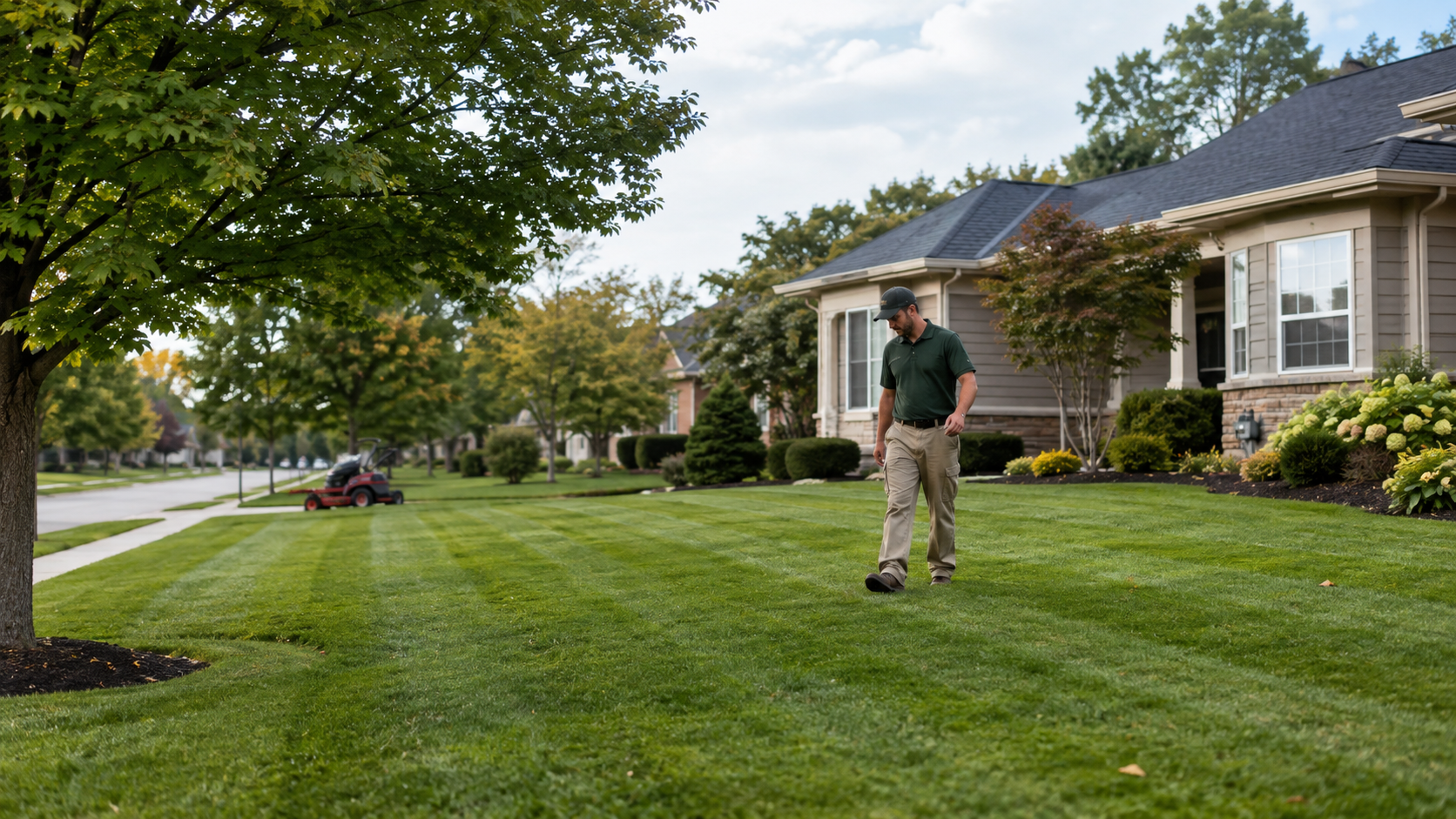
The biggest mistake in seasonal lawn care is treating the calendar like a checklist that must be completed on fixed dates. Weather and turf condition still matter. A cold April can delay growth. A dry August can make aeration difficult. A lawn that is already dense does not automatically need overseeding.
I use the calendar below as a decision guide for Gurnee homeowners. It combines Northern Illinois cool-season turf guidance from University of Illinois Extension with current Village of Gurnee rules that directly affect lawn watering and landscape-waste disposal.
Local Information
Two Gurnee Rules Should Be on Every Lawn Calendar
Some lawn-care advice is universal. These two items are specifically relevant to properties inside the Village of Gurnee.
Watering
May 15 through September 15
Gurnee's annual sprinkling restrictions use an odd-and-even address schedule. Even-numbered addresses may sprinkle on even-numbered calendar days. Odd-numbered addresses may sprinkle on odd-numbered days. Lawn sprinkling is allowed between 6:00 p.m. and 10:00 a.m.
Landscape Waste
April 1 through November 30
The Village lists April 1 through November 30 as the regular landscape-waste season. Disposal options and current fees can change, so homeowners should verify the current Village program before setting material at the curb.
The Village states that residents with newly seeded or sodded yards may obtain a special permit allowing watering for up to 14 consecutive days between 6:00 p.m. and 10:00 a.m. Check the current Village requirements before relying on that exception.
At a Glance
Gurnee Lawn Care Calendar by Month
This table is a planning guide, not a command to perform every service. The lawn's condition, recent rainfall, soil moisture, grass species, and previous treatments still control the final decision.
| Month | Primary Lawn Priorities | Usually Avoid or Delay |
|---|---|---|
| January | Minimal turf work. Plan the season and service equipment. | Unnecessary traffic on frozen, thawing, or saturated turf. |
| February | Finish mower maintenance and identify areas that need spring inspection. | Starting lawn treatments simply because temperatures briefly warm up. |
| March | Inspect winter damage and clean debris once the ground is firm enough to work. | Heavy traffic on soft soil and aggressive early fertilization. |
| April | Resume mowing when growth requires it. Address spring seeding early if it cannot wait until fall. Watch soil temperature for crabgrass timing. | Waiting too long to begin mowing or seeding cool-season turf late into warming weather. |
| May | Regular mowing, spring fertilization when justified, weed monitoring, irrigation planning. | Ignoring Gurnee watering restrictions beginning May 15. |
| June | Mow correctly, keep blades sharp, water deeply and infrequently if maintaining green turf. | Shallow daily watering and excessive nitrogen heading into heat. |
| July | Protect turf from heat and drought stress. Adjust mowing frequency to actual growth. | Forcing growth with unnecessary fertilizer or repeatedly waking dormant turf with inconsistent irrigation. |
| August | Begin the strongest Northern Illinois seeding window. Fertilize when appropriate. Aerate compacted soil when moisture allows proper coring. | Aerating rock-hard dry soil or seeding without a realistic watering plan. |
| September | Finish early fall seeding, continue mowing, support establishment, monitor leaf drop. | Waiting too late to establish new cool-season grass. |
| October | Keep mowing while grass grows, manage leaves, maintain sunlight to the turf, prepare for late-season fertilization. | Allowing heavy leaf cover to remain on the lawn for extended periods. |
| November | Final mowing based on growth, late-season fertilizer when appropriate, finish leaf removal and yard-waste disposal before the seasonal program ends. | Leaving the lawn excessively tall or buried under leaves going into winter. |
| December | Little active turf maintenance is needed. Clean and store equipment. | Unnecessary lawn traffic during freeze-thaw or saturated conditions. |
Spring
March Through May: Restart the Lawn Without Rushing It
March: inspect first
March is better used for inspection than aggressive lawn treatment. Remove branches and winter debris when the property is firm enough to work without creating ruts. Look for matted turf, damaged edges, bare areas, snowplow damage, drainage problems, and places where winter traffic compacted the soil.
Do not fertilize just because the first warm days arrive. Illinois Extension cautions against pushing leafy growth too early because early nitrogen can favor shoot growth at the expense of root development.
April: mowing begins when the grass says so
There is no useful fixed date for the first mowing. Start when the lawn is actively growing and tall enough to need a cut. Follow the one-third rule rather than waiting until the lawn is overgrown.
If bare areas absolutely need spring seeding, April is the second-choice window for Northern Illinois. Fall is generally better. Illinois Extension recommends finishing spring seeding early enough for young grass to establish before summer heat.
Illinois Extension notes that crabgrass germination becomes a concern when soil temperatures remain around 55 to 60 degrees for several consecutive days. In Northern Illinois, preventive treatment is generally later than Central Illinois. Do not rely on one fixed calendar date every year.
May: settle into the maintenance season
By May, mowing becomes regular on actively growing lawns. A spring fertilizer application may be appropriate depending on the desired lawn density and the property's overall fertility program. Northern Illinois timing generally runs later than Central Illinois.
Gurnee's annual lawn-sprinkling restrictions begin May 15. This is the point where irrigation scheduling must account for both turf needs and the Village's odd-and-even watering rules.
Summer
June Through August: Protect the Lawn Before Trying to Improve It
June: mowing quality matters more than cosmetic treatments
Continue mowing according to growth. University of Illinois Extension recommends avoiding overly short mowing and removing no more than one-third of the leaf blade at a time. Taller turf generally develops a larger root system and shades the soil surface better than scalped turf.
If the lawn is being irrigated to remain green, water thoroughly rather than applying frequent shallow sprays. Illinois Extension gives a general guideline of about 1 to 1.5 inches of water per week for active cool-season growth, but actual need changes with rainfall, soil, weather, exposure, and turf species.
July: decide whether the lawn will be irrigated or allowed to slow down
Cool-season grasses naturally slow down and may enter dormancy during hot, dry weather. Illinois Extension advises against repeatedly allowing a lawn to turn fully brown, watering just enough to green it, and then allowing it to go dormant again. That repeated transition consumes plant reserves.
If you choose to maintain green turf, irrigate consistently within Gurnee's permitted schedule. If you choose summer dormancy, understand that extreme drought can still require enough water to protect turf survival.
August: the lawn-improvement window opens
August is one of the most important months in this calendar. University of Illinois Extension identifies early August through early September as the ideal seeding period for cool-season lawns in Northern Illinois.
This is also a strong time to evaluate core aeration where compaction is actually present. Aeration is most useful when the machine can remove meaningful soil cores. Extremely dry, hard ground reduces penetration, while saturated ground increases the risk of surface damage.
Fall
September Through November: Recovery, Leaves, and Winter Preparation
September: finish establishment work early
Early September remains part of the preferred Northern Illinois cool-season seeding window. Seed needs time to germinate, establish roots, and develop before colder conditions slow growth. The later the project moves into fall, the less establishment time remains.
Continue mowing based on growth. Newly seeded turf requires a different watering strategy from an established lawn because the seedbed must stay consistently moist during germination and early establishment.
Gurnee's annual sprinkling restrictions run through September 15. If a newly seeded lawn requires additional watering during the restricted period, review the Village's current new-seed permit rules.
October: do not let leaf cover become the problem
Continue mowing while the turf is growing. Leaves can be mulched when the volume is light enough for the mower to reduce and distribute them without smothering the grass. When leaf volume becomes too heavy to break down cleanly, remove the excess.
The objective is not to make the property leaf-free every hour. The objective is to prevent dense, wet leaf cover from sitting on the turf long enough to block light and flatten the grass.
November: finish clean and avoid scalping
The final mowing should be based on grass growth, not an arbitrary date. Illinois Extension notes that the final cut can be slightly shorter than the normal height, but the lawn should not be scalped.
Late-season fertilization is commonly scheduled around late October to early November in Northern Illinois, depending on the lawn's program and the end of active mowing. Illinois Extension describes late-season fertilizer as a separate application from the primary late-summer and early-fall feeding.
Gurnee's regular landscape-waste season ends November 30, so late leaf and yard cleanup should account for the current collection schedule.
Winter
December Through February: Stop Treating a Dormant Lawn Like an Active One
There is very little routine turf maintenance to perform once the lawn is dormant. Winter is better used for equipment service, reviewing problem areas from the previous season, planning drainage or landscape work, and deciding whether the lawn actually needs renovation the following year.
Avoid unnecessary traffic when the surface is saturated or moving through freeze-and-thaw conditions. If snow removal repeatedly pushes material, salt, or traffic onto the same turf edges, note those areas for spring inspection rather than assuming they will automatically recover.
All Season
The Mowing Rules That Matter More Than the Exact Month
Mowing is the most frequent lawn-care action most homeowners perform, so small mistakes are repeated dozens of times during the season.
- Remove no more than about one-third of the grass blade in a single mowing.
- Avoid scalping the lawn to reduce how often you need to mow.
- Keep mower blades sharp enough to make a clean cut rather than tearing leaf tissue.
- Do not mow wet turf when it can be avoided.
- Adjust mowing frequency to growth instead of forcing every month into the same schedule.
Illinois Extension gives 2 to 3 inches as a general range for many cool-season home lawns and 2.5 to 3.5 inches for tall fescue, while some Extension guidance notes that turf-type tall fescue can perform well around 3 to 4 inches. The correct setting depends partly on the species present and the lawn's conditions. The critical mistake is mowing excessively short.
Irrigation
How Much Water Does a Gurnee Lawn Actually Need?
There is no honest answer based only on the city name. Water demand changes with rainfall, temperature, wind, soil, shade, turf species, rooting depth, and whether the homeowner wants active green growth through summer.
Illinois Extension uses about 1 to 1.5 inches of water per week as a general guideline for maintaining active green cool-season turf. That is not an instruction to run the sprinkler automatically every week. Rainfall counts.
Water deeply and less often
Apply enough water to wet the root zone, then allow the surface to dry rather than providing shallow daily irrigation.
Keep the seedbed consistently moist
New seed is an exception because germinating seed and young seedlings need moisture near the soil surface while roots are developing.
Seeding
When Should Gurnee Homeowners Seed or Overseed?
For Northern Illinois, University of Illinois Extension identifies early August through early September as the ideal window for establishing cool-season turf from seed. April is the second choice when fall timing is not possible.
Seeding Timing
Overseeding is not automatically useful on a dense lawn. It makes more sense where turf density is poor and the site can support additional grass. Shade, drainage, irrigation coverage, disease, traffic, and soil compaction can all cause thin turf. Adding seed without correcting the limiting condition may simply repeat the failure.
Fertilization
When Is Fertilizer Most Useful?
Fertilizer frequency should reflect the desired lawn quality and the site's actual needs. More applications are not automatically better.
University of Illinois Extension identifies late summer into early fall as the most important fertilization period for cool-season turf. For Northern Illinois, the primary late-summer or early-fall application is generally in August. A late-season application is typically around late October to early November.
Spring fertilizer may be part of a two-, three-, or four-application program, but Extension guidance cautions against very early spring nitrogen. For Northern Illinois, spring timing occurs later than the early-to-mid-May Central Illinois window.
Thin turf caused by deep shade, poor drainage, severe compaction, irrigation failure, or traffic will not become healthy simply because more nitrogen is applied.
Soil Compaction
When Does Core Aeration Belong on the Calendar?
Core aeration belongs on the calendar when soil compaction is actually limiting the turf. It should not be treated as mandatory annual maintenance for every property.
- High-traffic turf becomes hard and thin.
- Water enters compacted areas more slowly than nearby soil.
- Rooting is shallow in areas receiving repeated traffic.
- Construction or equipment traffic has compressed the upper soil.
- Overseeding is planned and better seed-to-soil conditions are needed.
Late summer and early fall pair well with aeration because cool-season turf is moving into a strong recovery period and the preferred Northern Illinois seeding window overlaps this part of the season.
Moisture matters. A hollow-tine aerator needs workable soil to pull useful cores. Very hard, dry ground can limit penetration. Saturated soil can rut, smear, or damage the surface.
Related Gurnee Service
Need to Understand Core Aeration Before Scheduling It?
I explain what the service does, when it is useful, access requirements, and how I evaluate a residential property before service.
Read my Gurnee core aeration service guide →Village Information
Leaves, Brush, and Landscape Waste in Gurnee
The Village of Gurnee lists April 1 through November 30 as the regular landscape-waste collection season. Gurnee currently offers both subscription and sticker-based disposal options through its contracted hauler. Fees and special free-collection periods can change from year to year.
The Village also states that brush and branch collection occurs weekly from mid-April through the end of November, subject to bundling requirements. Gurnee prohibits burning leaves and other landscape waste.
Container limits, bundle dimensions, fees, collection dates, and hauler details are operational rules that can change. I would use the Village's current landscape-waste page rather than relying on an old social post or neighborhood comment.
Gurnee, Illinois
What Makes This a Gurnee Lawn Calendar?
The turf recommendations come from Illinois-specific university guidance, while the watering and landscape-waste sections use current Village of Gurnee information. That distinction matters. Local lawn advice should be based on local rules and Northern Illinois growing conditions, not a national calendar copied from a warmer climate.
Individual properties still vary. Sun exposure, grass species, irrigation, drainage, traffic, soil condition, trees, and previous treatments can change what a specific lawn needs.
Evo Lawn & Landscape
Residential Lawn Care in Gurnee
I provide recurring lawn maintenance and seasonal lawn services for Gurnee homeowners. If you want me to review your property, send the address and the lawn problem you are trying to solve.
Homeowner Questions
Gurnee Lawn Care Calendar FAQs
When should I start mowing my lawn in Gurnee?
Start when the grass has resumed active growth and is tall enough to require mowing. Use the one-third rule rather than choosing a fixed first-mowing date.
What is the best time to overseed a lawn in Gurnee?
University of Illinois Extension identifies early August through early September as the ideal cool-season seeding window for Northern Illinois. April is a second-choice period when fall seeding is not possible.
When can I water my lawn in Gurnee?
From May 15 through September 15, Village sprinkling restrictions use odd-and-even address scheduling. Even-numbered addresses may sprinkle on even dates and odd-numbered addresses on odd dates, between 6:00 p.m. and 10:00 a.m. Verify the current Village rule before watering because municipal requirements can change.
How much water does an established lawn need?
Illinois Extension gives about 1 to 1.5 inches per week as a general guideline for keeping cool-season turf green and actively growing. Rainfall, soil, shade, weather, rooting, and grass species all affect the actual amount needed.
Should I fertilize my Gurnee lawn in early spring?
Do not rush early nitrogen simply because the lawn greens up. Illinois Extension recommends avoiding very early spring fertilization and identifies late summer into early fall as the most important fertilization period for cool-season lawns.
When should I aerate my lawn?
Aerate when compaction is actually restricting the lawn and the soil is moist enough for a core aerator to remove useful plugs. Late summer and early fall are especially practical when aeration is being paired with overseeding.
When does Gurnee collect landscape waste?
The Village currently lists the regular landscape-waste season as April 1 through November 30. Programs, fees, and special collection dates can change, so verify the current Village schedule before setting material out.
Can I burn leaves in Gurnee?
No. The Village of Gurnee states that burning landscape waste, including leaves and brush, is prohibited.
Bottom Line
A Good Lawn Calendar Tells You What Not to Do, Too
Gurnee homeowners do not need to fertilize, seed, aerate, dethatch, and spray the lawn every spring. Those jobs have different purposes and different timing.
Keep the basics simple: mow according to growth, avoid scalping, water based on actual need and Village rules, use August and early fall for major cool-season turf improvement, keep leaves from smothering the lawn, and diagnose the cause of thin turf before paying for another treatment.
Primary Sources
Where the Timing and Local Rules Come From
Municipal rules and turf recommendations can change. These are the primary sources used for this guide and should be rechecked when the article is updated.
- Village of Gurnee: Water and Sewer Service Information
- Village of Gurnee: Sprinkling Restrictions
- Village of Gurnee: Landscape Waste
- University of Illinois Extension: Mowing Your Lawn
- University of Illinois Extension: Watering Your Lawn
- University of Illinois Extension: Fertilizing Your Lawn
- University of Illinois Extension: Planting a New Lawn
- University of Illinois Extension: Spring Lawn Care Timing