

Gurnee Homeowner Resource
Gurnee Fall Yard Cleanup Guide
A good fall cleanup protects the lawn, keeps drainage paths open, handles leaves before they smother turf, and prepares the property for winter. It does not require stripping every planting bed bare. This guide separates the work that matters from the work that can wait until spring.
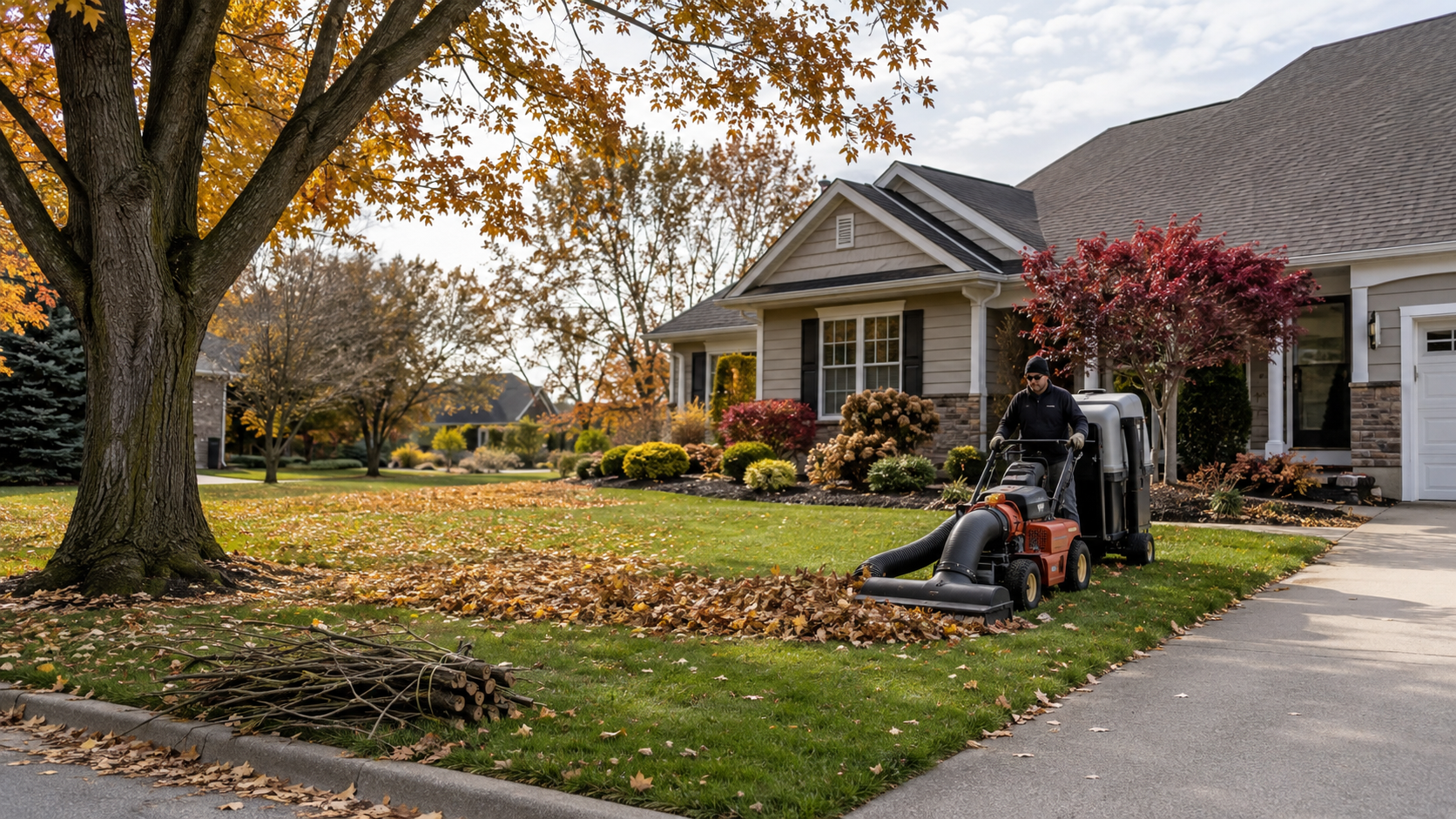
Fall cleanup should solve specific problems before winter: heavy leaves sitting on turf, overgrown grass going into dormancy, blocked drains, broken branches, diseased plant debris, and landscape waste that still needs to be collected before the seasonal program ends.
The wrong approach is to make the entire property look empty simply because the growing season is ending. Illinois Extension specifically recommends leaving some leaf litter and standing plant stems in planting beds when they are healthy because those materials provide winter habitat for pollinators and other wildlife.
Timing
When Should Gurnee Homeowners Start Fall Yard Cleanup?
Fall cleanup is better treated as a series of visits or tasks than one fixed date. Leaves do not fall all at once, grass may continue growing into late fall, and storms can create new debris after an early cleanup.
Practical Fall Sequence
Leaves
Do All Fall Leaves Need to Be Removed?
No. The location and volume of the leaves matter.
Leaves sitting in a thick layer on turf can block light and smother grass. Illinois Extension recommends removing or shredding heavy leaf accumulations on lawns. Light leaf cover can often be mulched into the turf with a mower.
Leaves in planting beds are different. Illinois Extension recommends leaving at least some healthy leaves in gardens and other low traffic areas because leaf litter can provide overwintering habitat for insects and other wildlife.
On the Lawn
Prevent a heavy mat
Mulch manageable leaf volume or remove the excess so grass is still visible and the turf is not buried for extended periods.
In Healthy Beds
Some leaves can stay
Leaves can provide insulation, organic matter, and winter habitat when they are not creating a drainage, disease, or access problem.
Lawn Protection
How Should Leaves Be Handled on the Lawn?
There are three practical options: mulch them, move them into suitable planting beds, or remove them from the property.
University of Illinois Extension recommends shredding leaves into turf when the amount is manageable. The important visual check is simple: after mowing, you should still be able to see the grass. If shredded leaves form a dense layer over the turf, there is too much material to leave in place.
- Mulch leaves when they are dry enough to shred cleanly.
- Make additional mower passes when needed to reduce particle size.
- Remove excess leaf volume when the turf remains covered after shredding.
- Do not leave wet leaf mats sitting over grass for long periods.
- Move some healthy leaves into planting beds when that fits the landscape.
Final Mowing
When Should You Stop Mowing in Gurnee?
Stop when the grass stops actively growing, not when the calendar reaches a predetermined date.
Illinois Extension states that the last mowing of the year can be slightly shorter than the normal mowing height, but the lawn should not be scalped. Allowing turf to remain excessively tall going into winter can also contribute to lawn problems.
If the lawn has been maintained tall through the season, reduce height gradually rather than removing a large amount of leaf tissue in one mowing.
Garden Beds
Should Every Perennial Bed Be Cut Down in Fall?
No. Illinois Extension recommends leaving healthy standing flower stems and some plant material through winter because hollow stems, seed heads, and leaf litter provide habitat and food for pollinators, birds, and other wildlife.
A homeowner who wants a cleaner appearance can selectively remove collapsed or visually problematic material while leaving healthy structural stems and seed heads in less formal portions of the landscape.
Healthy standing stems
Native and perennial stems can provide nesting and overwintering habitat and may also add winter structure to the landscape.
Healthy leaf litter in beds
Leaves can provide insulation and organic matter when they are not burying sensitive plants or blocking drainage.
Diseased debris
Plant material with significant disease problems should be cleaned up because some pathogens can overwinter on infected debris.
Material blocking access or drainage
Leaves and stems should not be allowed to block drains, walkways, steps, vents, or other functional areas.
Plant Health
What Plant Debris Should Definitely Be Removed?
Healthy plant material can often remain. Diseased material should be treated differently.
Illinois Extension recommends cleaning up plant debris when disease or significant pest problems were present because some nuisance organisms can survive the winter on infected material and contribute to problems the following season.
- Remove heavily diseased leaves and stems from affected plants.
- Clean vegetable garden debris when disease or pest pressure was significant.
- Remove rotting material that is piled against structures.
- Do not compost diseased material unless your composting method reliably reaches conditions appropriate for that material.
Branches and Brush
How Should Gurnee Homeowners Handle Fall Brush?
Gurnee's regular brush and branch collection runs weekly from mid April through the end of November on the normal garbage pickup day.
The Village states that brush must be tied in bundles no larger than 2 feet in diameter by 4 feet long. LRS will not collect routine branches that are not bundled.
Before Freeze Up
What Drainage Areas Should Be Checked During Fall Cleanup?
Fall leaves can hide or block drainage features at exactly the time properties are moving toward colder weather and freeze thaw cycles.
A fall cleanup should include a visual check of the areas that move water away from the house and across the property.
- Clear leaves from visible yard drains and catch basins.
- Check downspout outlets for leaf buildup.
- Keep drainage swales open instead of filling them with leaf piles.
- Remove debris from low areas where water normally needs to move.
- Do not intentionally pile leaves where runoff can carry them into the street.
Cleanup does not fix poor grading, failed underground drains, or chronic standing water. It simply makes sure seasonal debris is not adding another obstruction.
Gurnee Yard Waste
What Are the Current Gurnee Fall Yard Waste Rules?
The Village of Gurnee currently lists April 1 through November 30 as the regular landscape waste season. LRS offers a seasonal subscription and a sticker program for eligible residents.
For 2026, the Village lists the seasonal subscription at $151.42 and individual yard waste stickers at $3.19 each. Subscription customers receive a 95 gallon yard waste cart and are limited to six landscape items per week.
| Material | Best Handling Method |
|---|---|
| Manageable leaf cover on lawn | Mulch into the turf when shredded material does not bury the grass. |
| Heavy leaf accumulation | Remove excess through the applicable Village or private collection method. |
| Healthy leaves in beds | Leave some in place when they do not create disease, access, or drainage problems. |
| Small branches | Bundle according to the Village's brush requirements. |
| Diseased plant material | Remove from the landscape rather than leaving it to overwinter around affected plants. |
Do not rely on an old vacuum collection map or pickup week. Check the Village's current fall leaf collection schedule when it is published for the year you need service.
Winter Preparation
What Should Be Done Before the Property Freezes Up?
- Finish heavy leaf removal from turf.
- Complete the final mowing after growth slows.
- Remove diseased plant debris.
- Clear visible drainage paths and downspout outlets.
- Move hoses and temporary watering equipment out of lawn areas.
- Pick up branches and debris that could become hidden under snow.
- Finish routine landscape waste disposal before the seasonal collection period ends.
The goal is not to make the yard sterile. It is to prevent avoidable winter problems while leaving healthy parts of the landscape intact.
Do Less Where It Helps
What Can Wait Until Spring?
Healthy perennial stems, seed heads, ornamental grasses, and some leaf litter in garden beds can stay through winter. Illinois Extension recommends this approach because those materials can support pollinators, birds, and other wildlife.
Spring is often the better time to remove healthy standing stems once overwintering insects have had a chance to emerge and the landscape is beginning active growth again.
Keep the lawn functional and free of heavy leaf mats. Keep paths, drains, and structures clear. But healthy garden beds do not need to be stripped down to soil simply for appearance.
Gurnee, Illinois
A Better Fall Cleanup Separates Turf, Beds, Brush, and Waste
I would not treat the entire property as one cleanup surface. Lawn areas need light and airflow. Planting beds can benefit from some organic material and winter habitat. Brush must be prepared for collection. Diseased debris needs removal. Drainage paths need to remain open.
Once those areas are separated, the cleanup becomes simpler and more useful.
Related Gurnee Guide
How Should Leaves Be Disposed of in Gurnee?
My separate Gurnee yard waste guide covers the Village collection season, subscription and sticker options, brush bundling, leaf handling, and burning restrictions.
Read the Gurnee yard waste and leaf disposal guide →Evo Lawn & Landscape
Residential Fall Cleanup in Gurnee
I provide residential fall cleanup in Gurnee with the focus on the work that actually protects the property: lawn leaf removal, final mowing, landscape debris cleanup, and proper handling of seasonal waste.
Gurnee Homeowner Questions
Gurnee Fall Yard Cleanup FAQs
When should I start fall cleanup in Gurnee?
Start as leaf volume and plant decline increase, but treat cleanup as an ongoing process rather than one fixed date. October and November usually require the heaviest leaf management, while mowing continues as long as the turf is actively growing.
Do I need to remove every leaf from my lawn?
No. Light leaf cover can be shredded with a mower and recycled into the turf. Heavy leaf mats should be reduced or removed so the grass is not buried.
Can I leave leaves in my garden beds?
Yes. Illinois Extension recommends leaving some healthy leaves in planting beds and other suitable areas because they provide insulation, organic matter, and overwintering habitat. Remove leaves when they are diseased, blocking drainage, or creating another specific problem.
Should I cut all perennials to the ground in fall?
No. Healthy standing stems and seed heads can provide winter habitat and food for wildlife. Diseased plant debris should be removed.
When should I do the final mowing?
Do the final mowing when grass growth has substantially slowed or stopped. Illinois Extension states that the final cut can be slightly shorter than normal, but the lawn should not be scalped.
When does Gurnee yard waste collection end?
The Village currently lists November 30 as the end of the regular landscape waste season.
How should branches be prepared for Gurnee collection?
The Village states that brush bundles may not exceed 2 feet in diameter by 4 feet long and must be tied with string or twine. Routine unbundled branches are not collected by LRS.
Can I burn leaves during fall cleanup in Gurnee?
No. The Village prohibits burning leaves, brush, and other landscape waste.
Should I remove diseased leaves and stems?
Yes when disease problems were significant. Illinois Extension recommends removing infected debris because some pathogens can overwinter on plant material and contribute to future problems.
Bottom Line
Protect the Lawn, Clear the Functional Areas, and Leave Healthy Habitat Where It Belongs
A useful Gurnee fall cleanup keeps heavy leaf cover off the lawn, completes mowing based on actual grass growth, removes diseased debris, clears drainage areas, and handles brush and yard waste within the Village's seasonal rules.
It does not require removing every healthy leaf or cutting every perennial stem to the ground. Turf, planting beds, drainage areas, and waste collection all have different needs.
Primary Sources