

Lawn Dethatching Service in Glencoe, IL
Remove excessive thatch when buildup is interfering with your existing lawn.
Evo Lawn & Landscape accepts residential lawn dethatching and power-raking inquiries in Glencoe, Cook County, Illinois.
We review the thatch layer, grass condition and accessible turf before recommending mechanical removal. The service includes loosening excess material, collection and cleanup within the approved scope.
No unnecessary annual dethatching packages. No required overseeding or aeration purchase.
- Residential dethatching from $200+
- Mechanical power-raking service
- Collection of loosened thatch
- Seasonal spring and fall scheduling
- Optional aeration and overseeding
Prefer to call or text? 224-777-0061
Professional Dethatching for Glencoe Lawns
Excessive thatch can build up between the green grass and the soil, making it harder for the lawn to function normally.
Evo Lawn & Landscape offers mechanical lawn dethatching and power raking for qualifying residential lawns in Glencoe, IL 60022.
Properties near downtown Glencoe, Green Bay Road and Sheridan Road may have different sun exposure, turf varieties and lawn maintenance histories. Those differences matter more than the neighborhood name when determining whether dethatching is needed.
We consider the visible thatch layer, lawn condition, access and recovery timing before preparing the work scope.
Request a Glencoe Lawn Quote →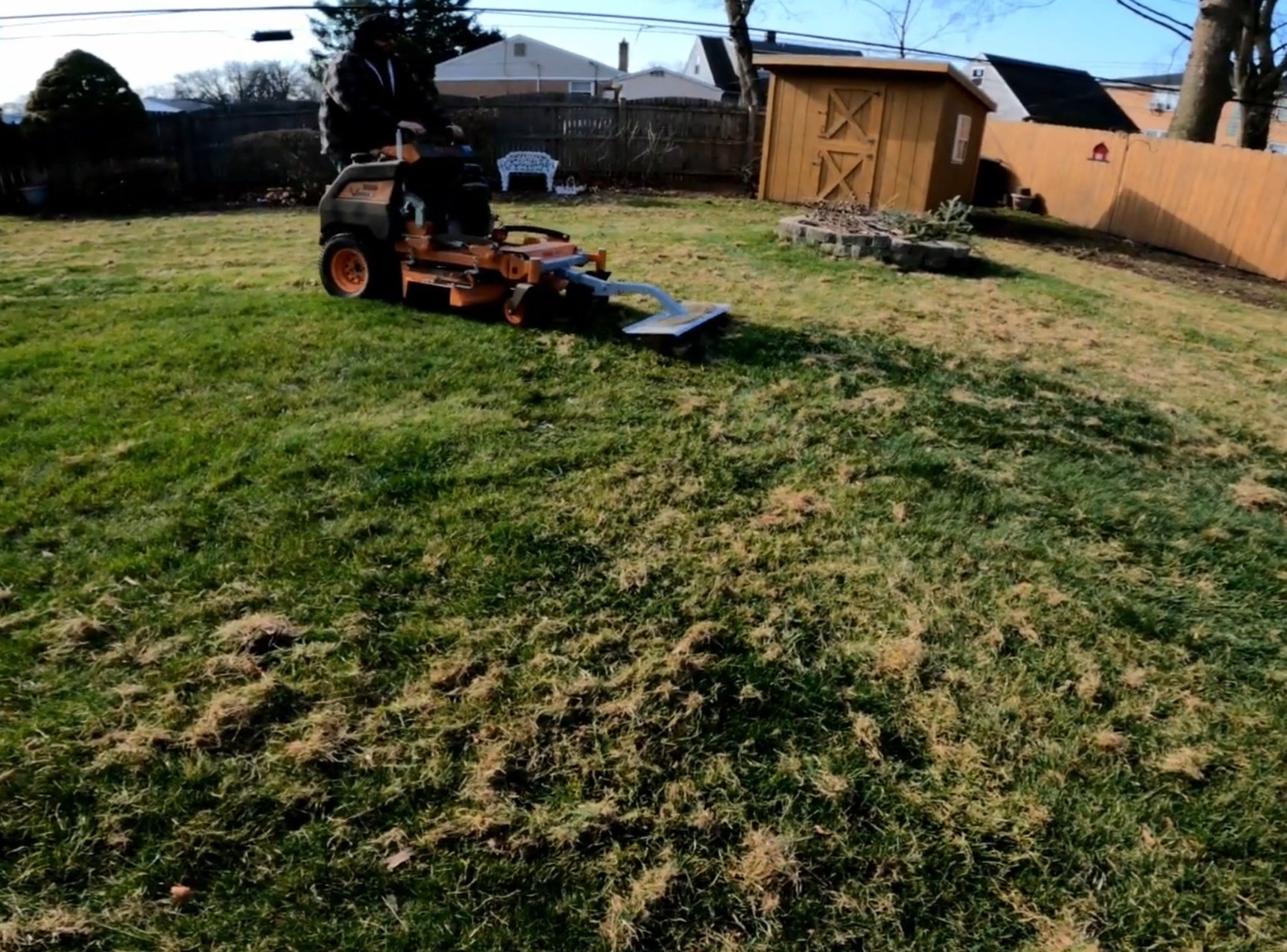
What Is Lawn Thatch and How Does Power Raking Work?
Thatch is an organic layer of stems, roots and related turf material between the living grass and soil. A thin layer is normal. Mechanical dethatching is intended for excessive buildup—not every lawn.
What Is Lawn Thatch?
University of Illinois Extension identifies thatch thicker than approximately ½ inch as a potential problem.
Excessive buildup can interfere with lawn performance and may contribute to unfavorable conditions for turf roots.
Normal mowing clippings are not the primary cause of thatch because they generally break down relatively quickly.
How Dethatching and Power Raking Work
Specialized dethatching equipment works through the turf to loosen accumulated material at the surface.
Power raking generally describes a more aggressive mechanical removal method. The correct amount of disturbance depends on thatch depth and the grass condition.
Loosened material is then collected as part of the approved cleanup scope.
More aggressive is not always better. Excessive dethatching can pull up living turf and expose bare areas. We recommend it only when the condition of the lawn justifies the disruption.
Research reference: University of Illinois Extension — Managing Thatch in Lawns .
When to Dethatch Your Glencoe Lawn
Aggressive dethatching should be timed for a period when cool-season turf can recover. Late summer into early fall is usually the preferred window in northern Illinois. Spring can also be suitable for some lawns.
Late Summer and Early Fall
Late August into early fall can provide favorable growing conditions for cool-season grass recovery.
This window also pairs more naturally with overseeding if mechanical removal exposes thin turf.
Spring Dethatching
Spring dethatching may be appropriate when the thatch layer is excessive and grass is actively growing.
We avoid scheduling aggressive work solely by calendar date. Turf recovery conditions and the actual buildup determine suitability.
Dethatching is not automatically annual. Lawns without significant thatch buildup may not need this service at all. Severe summer heat, drought, saturated soil or already stressed turf can make aggressive removal a poor choice.
Signs Your Lawn May Need Dethatching
The most useful sign is a visibly excessive thatch layer when the turf is examined down to the soil. Surface appearance alone cannot confirm it.
Thick Organic Layer
A dense layer of intertwined stems and roots is present between the green grass and soil.
Unusually Spongy Turf
The lawn feels springy underfoot even though the ground is not simply waterlogged.
Poor Turf Performance
Heavy thatch can contribute to weak performance, but thinning also has other possible causes.
Excessive Buildup Before Seeding
A thick thatch layer may interfere with useful seed-to-soil contact when overseeding is planned.
Repeated Surface Buildup
A recurring thatch problem may call for reviewing watering, fertilization and other lawn practices.
A Lawn That Needs an Assessment
If the lawn is thin or struggling but has little true thatch, another treatment may be more appropriate.
Dethatching vs. Core Aeration: Which Does Your Lawn Need?
Dethatching removes excessive organic buildup near the turf surface. Core aeration removes soil plugs to help relieve compaction. They solve different problems and do not automatically need to be purchased together.
Lawn Dethatching / Power Raking
Primary problem: Excessive accumulated thatch.
Method: Mechanically loosen and remove organic material from the turf layer.
Good fit: A lawn with a significant thatch layer and suitable recovery conditions.
Quote Dethatching →Lawn Core Aeration
Primary problem: Soil compaction.
Method: Hollow tines extract small plugs of soil and create temporary openings in the root zone.
Good fit: Compacted residential turf where aeration is appropriate.
Glencoe Core Aeration →What's Included in Our Lawn Dethatching Service?
The approved service includes mechanical dethatching of the agreed residential turf areas and collection of loosened thatch material. Cleanup and disposal details are confirmed in the written quote.
Lawn Condition Review
We consider the visible thatch layer, existing grass condition, access, slopes and obstacles before recommending the work.
Mechanical Power Raking
Approved turf sections are mechanically worked to loosen excessive thatch from the lawn surface.
Thatch Collection
Loosened material is collected from the agreed work areas. Material handling depends on volume and the approved quote.
Work Area Cleanup
We clean the agreed work area after the dethatching operation and confirm how collected material will be handled.
Aftercare Guidance
We explain what temporary turf disruption may look like and whether additional lawn work could be appropriate.
Optional Lawn Improvements
Core aeration, overseeding and starter fertilizer can be separately reviewed and quoted.
Debris disposal matters. Collection and cleanup are part of the approved dethatching scope. Off-site hauling, unusual debris volumes and additional lawn renovation work must be specifically included in the estimate.
Lawn Dethatching Pricing in Glencoe, IL
Evo Lawn & Landscape offers residential dethatching starting at $200 for qualifying lawns.
The final price depends on the actual mowable turf area, thatch buildup, equipment access and cleanup workload.
Heavier accumulation may require more detailed collection than a light dethatching project.
We confirm the total quote before service is scheduled.
Get My Exact Dethatching Price →Starting Price
For qualifying residential lawns. Final pricing is property-specific.
- Mechanical dethatching
- Agreed turf service areas
- Collection of loosened material
- Approved work-area cleanup
- Separate optional add-on quotes
Price increases can result from larger lawns, heavy buildup, difficult access, slopes and debris handling.
Request My Free Dethatching Quote →Why Choose Evo Lawn & Landscape?
Evo Lawn & Landscape is an owner-operated residential lawn care business established in 2015. We provide mechanical dethatching as a specific service, not as a routine recommendation for every lawn.
Dethatching Only When Appropriate
A lawn with little actual thatch may benefit more from another maintenance approach. We review the problem before recommending aggressive turf disruption.
Standalone Service Available
You can request dethatching without purchasing overseeding, core aeration or fertilizer. Optional services are only included when approved.
Defined Collection and Cleanup
We consider the material loosened, the cleanup workload and disposal preference before providing the final price.
Glencoe service authorization: The Village requires professional landscapers to obtain applicable authorization before providing landscape maintenance services. Scheduling is subject to required licensing, insurance documentation, operating restrictions and route availability. View Village requirements.
Other Residential Lawn Services in Glencoe
Dethatching targets excessive thatch. These separately quoted services address different lawn and seasonal needs.
Core Aeration
Hollow-tine aeration for qualifying compacted lawns.
Glencoe Core Aeration →Weekly Lawn Mowing
Recurring residential grass cutting, trimming and edging service.
Glencoe Weekly Lawn Mowing →Fall Cleanup & Leaf Removal
Seasonal cleanup of leaves and normal yard debris, separate from dethatching.
Glencoe Fall Cleanup →Frequently Asked Questions About Lawn Dethatching
Direct answers about cost, timing, power raking, cleanup, aeration and lawn recovery.
How much does lawn dethatching cost in Glencoe, IL?
Evo Lawn & Landscape starts residential dethatching at $200 for qualifying lawns. Final pricing depends on lawn area, thatch buildup, access, terrain, collection and cleanup workload. We provide a property-specific quote before scheduling.
When is the best time to dethatch a lawn in Glencoe?
Late August into early fall is generally preferred for aggressive dethatching of northern Illinois cool-season lawns. This gives the turf a better opportunity to recover and allows for overseeding when appropriate. Spring is another possible window.
Does dethatching damage healthy grass?
Mechanical dethatching is disruptive and can pull up living grass, particularly when much of the root system is growing in the thatch layer. A lawn may look thinner immediately afterward. This is why Evo recommends the service only when buildup justifies it.
Is core aeration better than dethatching?
Neither is universally better. Dethatching removes excessive organic buildup near the grass surface. Core aeration removes small soil plugs to address soil compaction. A lawn may need one, both or neither depending on the condition.
How often should I dethatch a North Shore lawn?
Dethatching should be based on actual thatch thickness, not an automatic annual schedule. A thin thatch layer is normal. If the lawn has excessive buildup, mechanical removal may be justified. Repeated buildup should prompt a review of maintenance and growing conditions.
Do you collect the thatch after power raking?
Yes. Collection of material loosened during dethatching is part of the approved service scope. Cleanup areas, debris quantity and whether off-site hauling is included are confirmed in the quote. Dethatching does not mean simply leaving large piles of loosened material.
Should I overseed after dethatching?
Overseeding may be useful if dethatching leaves thin or exposed areas and growing conditions support new grass establishment. It is not required for every job and is quoted separately. Fall generally offers a favorable seeding window for cool-season lawns.
Is dethatching the same as spring yard cleanup?
No. Dethatching mechanically addresses excessive organic material within the turf. Spring cleanup usually focuses on leaves, winter debris and agreed landscape areas. The services can be booked together if both are needed, but they have different purposes.
Can dethatching damage sprinkler lines or shallow wires?
It is possible for mechanical equipment to damage shallow or exposed private features. Homeowners should mark sprinkler heads, landscape lighting, shallow cables, invisible fence wires and other hazards. The service does not include locating unmarked underground systems.
Can I book a one-time dethatching service?
Yes. Evo provides standalone residential dethatching quotes. You do not need a weekly lawn maintenance contract or an ongoing dethatching subscription to request this service. Scheduling depends on property condition and availability.
What is the difference between a power rake and a dethatcher?
Both terms describe mechanical approaches to removing accumulated material from turf. Power raking often refers to a more aggressive process. The correct equipment settings and treatment intensity depend on the lawn's thatch depth and condition.
Do grass clippings create lawn thatch?
Normal grass clippings generally do not cause excessive thatch. They contain substantial moisture and usually decompose relatively quickly. Thatch consists mainly of slower-decomposing stems, roots and similar material between the turf canopy and soil.
Do you offer dethatching near downtown Glencoe?
Evo Lawn & Landscape accepts dethatching inquiries from qualifying residential properties throughout Glencoe, including areas near downtown and Green Bay Road. The exact address, access, lawn suitability, route and Village requirements are reviewed before service is confirmed.
How do I request a dethatching estimate in Glencoe?
Complete the two-step Glencoe dethatching quote form with your address, lawn condition and contact details. You may also call or text 224-777-0061 . We review the work before confirming pricing.
Request Your Free Glencoe Dethatching Estimate
If your lawn has excessive thatch or you are unsure whether power raking is needed, send us the property details for review.
Dethatching starts at $200 for qualifying residential lawns.
You can request standalone dethatching or ask for a separate quote for aeration, overseeding and starter fertilizer.
Prefer to call or text? 224-777-0061
Short form for homeowners ready to request a price.
Thank you. Evo Lawn & Landscape will review your property details and respond.
No obligation to book. Final pricing and service availability are confirmed before scheduling.
