

Lake Bluff Lawn Care
Why Is My Lake Bluff Lawn Thin or Repelling Water?
Hard soil, slow water absorption, and thin grass can point to compaction, but those symptoms do not prove that core aeration is the answer. This guide shows how to separate a legitimate soil problem from drainage, shade, irrigation, or turf failure.
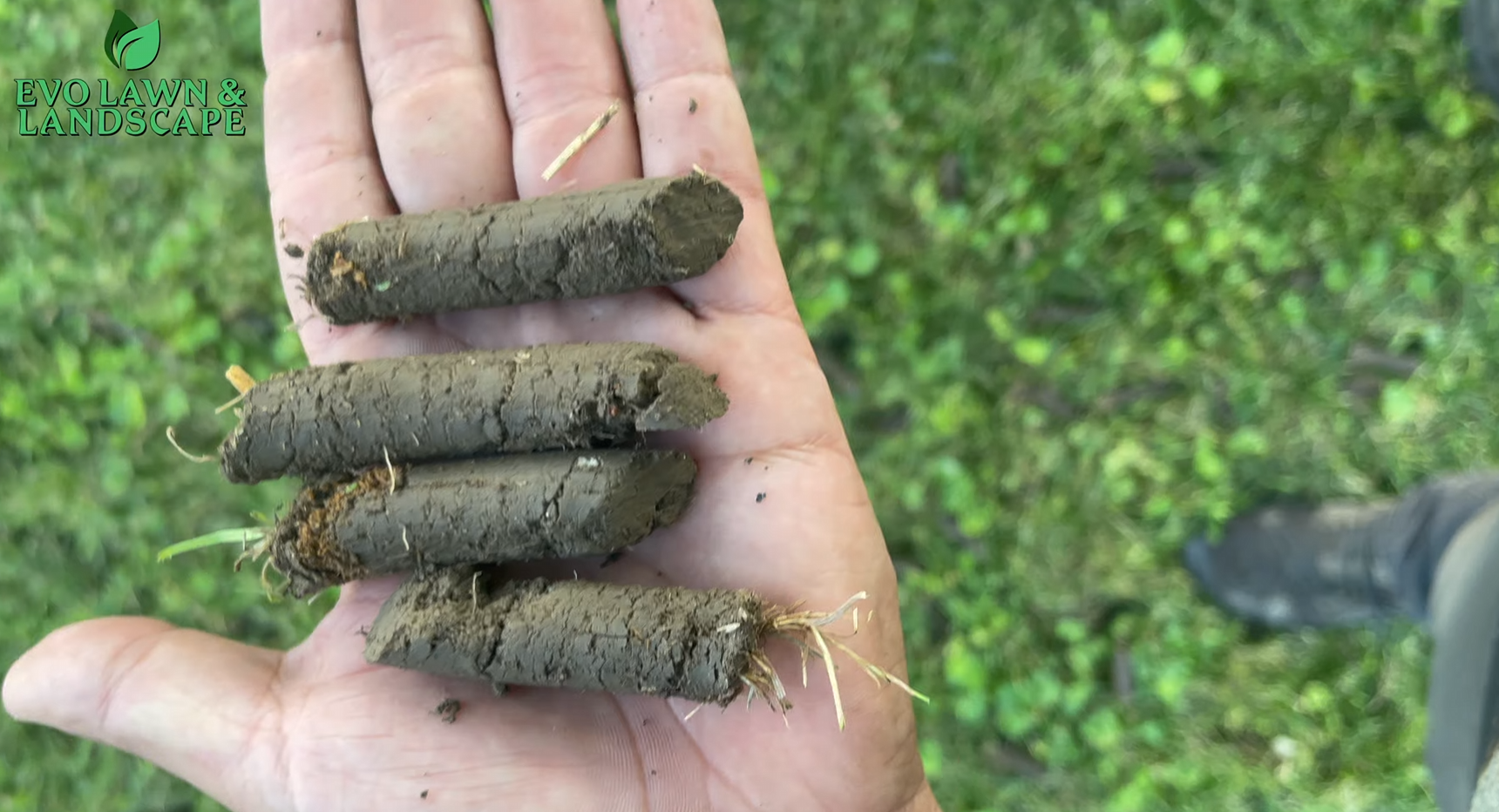
A lawn can receive regular mowing, fertilizer, weed control, and irrigation while still struggling below the surface. When the soil becomes compressed, grass roots have less usable pore space for air and water. The turf may stay thin, recover slowly, or shed water across the surface.
I provide residential core aeration in Lake Bluff, Illinois. Before recommending it, I look at the symptom, where it occurs, how the soil behaves, and whether another condition is more likely to be responsible.
Why Can a Maintained Lawn Still Stay Thin?
Fertilizer supplies nutrients. Irrigation supplies water. Neither service automatically corrects compressed soil. Turf roots still need a soil structure that allows water, oxygen, and root growth through the upper profile.
Compaction often develops where people, pets, mowing equipment, construction activity, or repeated traffic use the same path. The weak area may be limited to a gate, side yard, patio approach, play zone, or driveway edge rather than the entire lawn.
- Grass repeatedly thins in the same traffic corridor.
- The soil feels firm even when it contains normal moisture.
- The turf wilts quickly because roots remain near the surface.
- Water begins moving sideways before soaking into the ground.
- Seed struggles to establish despite adequate watering.
- The lawn recovers slowly after heat or physical use.
Why Does Water Run Across the Lawn Instead of Soaking In?
Compaction can reduce infiltration near the surface, but runoff does not automatically mean the lawn needs aeration. First determine where the water originates and why it is moving.
It can improve infiltration through compacted turf soil. It cannot replace grading, drainage improvements, downspout management, or correction of excessive water entering the property.
How Can I Test a Lake Bluff Lawn for Soil Compaction?
Use several observations together. One hard spot or one puddle is not enough evidence.
- Wait until the soil is moist from ordinary rain or watering, but not saturated.
- Push a screwdriver or soil probe into open turf and note the resistance.
- Repeat the test near gates, walkways, play areas, patio routes, and equipment paths.
- Compare root depth by inspecting a small plug or exposed lawn edge.
- Watch how quickly water enters each area during a normal irrigation cycle.
Compaction is more likely when a high-use area is consistently harder to penetrate, thinner, slower to absorb water, and more vulnerable to drought stress than nearby turf.
What Does Core Aeration Actually Change?
A hollow-tine core aerator removes small cylinders of turf and soil. Unlike spike aeration, it physically removes material instead of only pushing soil sideways.
The open channels are temporary, but they reduce resistance in the treated zone and increase exposed soil surface. The surrounding soil can relax into the openings while air and water move more freely through the upper root area.
Core Aeration Can Support
A healthier root environment
Reduced surface compaction, improved infiltration, better air exchange, and improved conditions for overseeding.
Core Aeration Cannot Guarantee
An instant visual transformation
Results still depend on living turf, soil condition, watering, mowing, fertility, sunlight, weather, and traffic.
See the Equipment Work
Watch a Residential Lawn Being Core Aerated
This short video shows the machine crossing an established lawn and pulling soil plugs. It provides a realistic view of the process and what remains on the surface afterward.
Watch the core aeration video on YouTube →When Is Lawn Aeration the Wrong Fix?
Aeration is wasted money when compaction is not the limiting condition.
| Actual Problem | Why Aeration Is Insufficient |
|---|---|
| Dense shade | Core aeration cannot create sunlight or remove competition from mature roots. |
| Improper grading | Removing shallow cores does not change the direction water flows. |
| Broken or uneven irrigation | Dry and overwatered zones remain until the watering system is corrected. |
| Active insects or disease | The damaging organism requires direct diagnosis and treatment. |
| Mostly dead or weed-dominated turf | The lawn may need renovation instead of a single maintenance procedure. |
| Severe thatch | Core aeration may help modest thatch, but heavy accumulation may require dethatching. |
When Is the Best Time for Core Aeration in Lake Bluff?
Late summer through early fall is normally the strongest period for cool season lawns in northern Illinois. Turf is entering active growth, temperatures are moderating, and recovery conditions are generally stronger than during summer heat.
Spring core aeration can also be appropriate when compaction cannot wait. The ground must be workable. Hard, dry soil limits tine penetration, while saturated soil increases the risk of rutting and smearing.
Service Conditions
Should Core Aeration and Overseeding Be Combined?
Combine the services when two separate problems exist: compacted soil and inadequate turf density.
Dense turf with hard soil
The lawn has enough grass plants, but the soil environment needs relief.
Thin turf with confirmed compaction
The treatment improves the soil environment while adding seed to increase density.
Overseeding fails when the seed dries repeatedly. Do not add it unless the property can be watered consistently through germination and early establishment.
What Must Be Marked Before Core Aeration?
Core aeration equipment penetrates the turf. Homeowners must identify private underground features that are not visible from the surface.
Mark Clearly
Private underground items
- Sprinkler heads and valve boxes
- Invisible dog fence lines
- Landscape lighting wires
- Private drains and cleanouts
- Shallow repairs or buried components
Clear Access
Surface obstacles and gates
- Hoses, toys, branches, and furniture
- Pet waste
- Vehicles blocking side access
- Locked gates
- Pets inside the service area
I perform landscaping work within the operating hours established for landscape contractors by the Village of Lake Bluff.
How Much Does Core Aeration Cost in Lake Bluff?
My residential core aeration service in Lake Bluff starts at $100. The quote is based on serviceable turf rather than total parcel size.
- Actual lawn square footage
- Front yard only or full property
- Backyard access and gate width
- Slopes and difficult terrain
- Obstacles and separated turf areas
- Marked exclusions
- Overseeding or another selected service
The house, driveway, patios, landscape beds, wooded areas, and other non-turf surfaces are excluded. A quote based only on lot size can substantially overstate or understate the work.
Lake Bluff, Illinois
Core Aeration for Lake Bluff Homeowners
I provide residential core aeration when compacted soil is limiting root development, slowing water entry, weakening high-traffic turf, or reducing the effectiveness of overseeding.
Service starts at $100. Review the process, pricing factors, access requirements, and request form on my Lake Bluff core aeration service page.
Evo Lawn & Landscape
Request Core Aeration in Lake Bluff
Send me the property address and explain where the lawn is thin, hard, or slow to absorb water. I will review the turf area, access, terrain, exclusions, and whether aeration only or aeration with overseeding makes sense.
Homeowner and AI Search Questions
Lake Bluff Core Aeration FAQs
Why does water run off my Lake Bluff lawn instead of soaking in?
Surface runoff can be caused by compacted upper soil, but it can also result from steep grade, excessive irrigation, saturated soil, or water entering from another area. Core aeration may help only when soil compaction is limiting infiltration.
How do I know whether my lawn needs core aeration?
Test normally moist soil in several locations with a screwdriver or soil probe. Compaction is more likely when the tool enters open turf easily but is difficult to push into high traffic areas, or when those areas also remain thin and absorb water slowly.
What is the best time for core aeration in Lake Bluff, Illinois?
Late summer through early fall is usually the strongest period for cool season lawns because turf is actively growing and can recover under cooler conditions. Spring can also work when compaction needs attention and the soil is workable.
Will core aeration repair a thin lawn?
Aeration can improve the soil environment when compaction is contributing to thinning. It will not correct heavy shade, irrigation failure, active insects, disease, poor grading, or dead turf. Thin lawns may also need overseeding.
Should I overseed immediately after lawn aeration?
Overseed when the existing turf lacks density and consistent watering is available. Skip seed when the lawn is already dense and the main objective is relieving soil compaction.
Should I remove the soil plugs after aeration?
No. Leave the soil plugs on the lawn. They gradually break apart through rain, mowing, and normal use.
How much does core aeration cost in Lake Bluff?
Residential core aeration starts at $100. Final pricing depends on actual turf area, access, gate width, slopes, obstacles, exclusions, and whether overseeding or another service is included.
Bottom Line
Confirm Compaction Before Paying for Aeration
Core aeration is effective when compressed soil is limiting infiltration, root growth, and turf recovery. It is not a universal repair for every thin, wet, shaded, or damaged lawn.
Test several areas, identify the water source, and rule out irrigation, shade, grading, pests, and disease. When compaction is confirmed, late summer through early fall is usually the strongest treatment window for a Lake Bluff lawn.
Technical References