

Lawn Dethatching Service in Lake Bluff, IL
I provide residential lawn dethatching service in Lake Bluff when a lawn has excessive thatch or matted surface material that needs to be mechanically removed.
Dethatching, sometimes called power raking, is not something every lawn needs every year. I would rather determine whether the lawn actually needs it than sell unnecessary work.
If the lawn has a true thatch problem, I can build the service around the condition of the turf and add aeration, overseeding, or fertilizer when those services make sense.
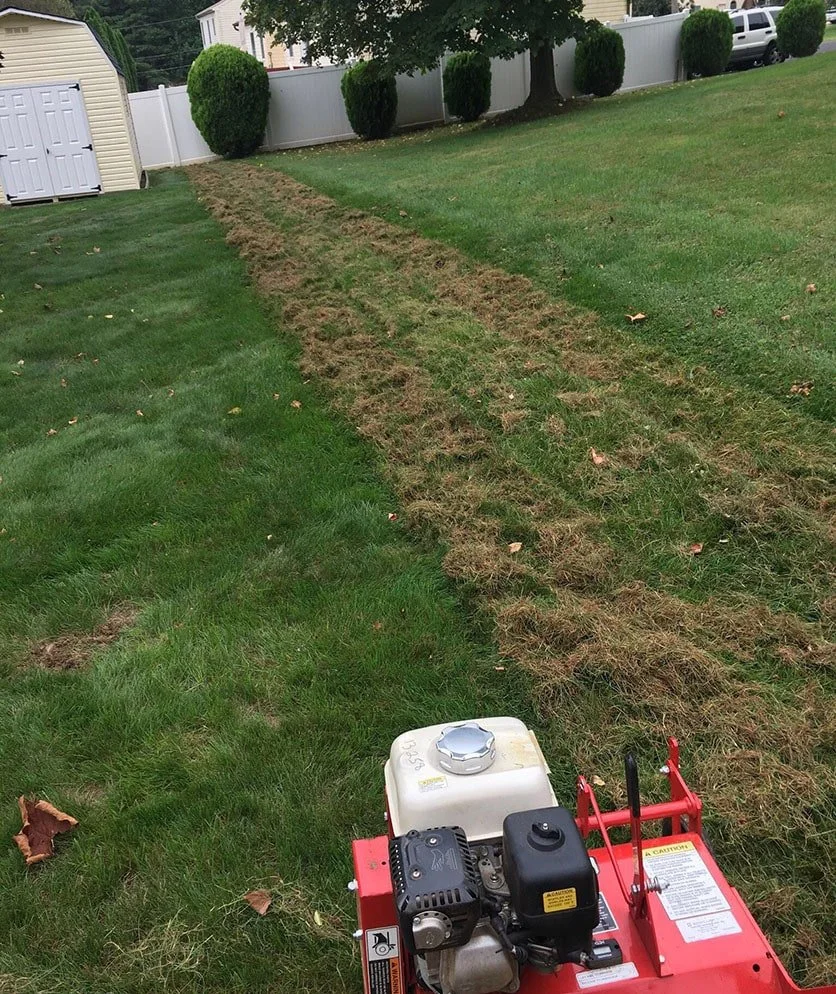
What Is Lawn Dethatching?
Thatch is the layer of living and dead stems, roots, and organic material between the green grass and the soil surface. Dethatching mechanically removes excessive buildup when that layer has become a problem.
Thatch Is Not Just Grass Clippings
Normal mowing clippings break down relatively quickly. A true thatch layer is primarily built from turf stems, roots, and other organic material that accumulates faster than it decomposes.
Some Thatch Is Normal
A lawn does not need to be stripped down simply because a small amount of thatch exists. The concern is excessive buildup that begins interfering with normal turf management.
Dethatching Is Aggressive
A dethatcher or power rake mechanically works through the turf surface. That can temporarily thin the lawn, especially when substantial thatch needs to be removed.
Does Your Lake Bluff Lawn Actually Need Dethatching?
I do not want homeowners paying for dethatching simply because the lawn looks brown underneath the green grass.
Dead leaf blades and seasonal debris near the surface are not automatically the same thing as excessive thatch. The actual layer needs to be evaluated closer to the soil surface.
Excessive thatch is generally the concern once the layer reaches roughly one half inch or more and begins affecting normal lawn management.
If the real problem is soil compaction instead, core aeration may be the better service. If the lawn is already thin, overseeding may need to be part of the recovery plan.
Signs I Look For
I want the service to match the problem rather than forcing every lawn into the same treatment.
- Visible excessive thatch layer
- Spongy turf surface
- Thatch interfering with the soil surface
- Dense turf with organic buildup
- Thin areas that may need reseeding afterward
- Compaction that may call for aeration instead
I Do Not Recommend Dethatching Every Lawn Every Year
Some thatch is normal. Dethatching is useful when buildup has become excessive, but aggressively removing material from a lawn that does not need it can create unnecessary stress.
I would rather recommend core aeration, overseeding, or normal maintenance when those services better match what is actually happening in the lawn.
Dethatching and Core Aeration Solve Different Problems
Homeowners often hear both services recommended together, but they do different jobs.
Dethatching
Dethatching mechanically removes excessive organic buildup from around the turf surface.
Core Aeration
Core aeration removes plugs of soil and primarily addresses soil compaction while also helping improve conditions around the root zone.
Lake Bluff Core AerationSometimes Both Make Sense
A lawn can have excessive thatch and compacted soil at the same time. I can quote both when the condition of the property supports using both services.
When Is the Best Time to Dethatch a Lake Bluff Lawn?
Aggressive dethatching should be timed so the lawn has favorable conditions to recover afterward.
Late Summer and Early Fall
Lake Bluff lawns are primarily cool season turf. Late summer into early fall can provide strong conditions for recovery and reseeding after aggressive dethatching.
I do not want to aggressively dethatch turf during high heat, drought stress, or other conditions that reduce the lawn's ability to recover.
What About Spring?
Spring work depends on lawn condition and what type of surface material actually needs to be removed.
I do not automatically recommend aggressive dethatching simply because spring has arrived. The service should match the actual lawn condition.
Overseeding After Dethatching
Dethatching can temporarily thin an existing lawn. Overseeding can be a useful companion service when significant material is removed and the lawn needs additional turf density.
Better Seed Access
Removing excessive surface buildup can expose areas where seed has better access to the soil surface.
Refill Thin Areas
If dethatching exposes thin turf, overseeding can introduce new grass into those areas.
Lake Bluff Lawn OverseedingWatering Still Matters
Seed does not establish simply because it was applied. Homeowners need to follow the watering instructions provided for the overseeding work.
How Much Does Lawn Dethatching Cost in Lake Bluff?
I provide property specific pricing because the amount of work depends on the lawn, property access, and the amount of material being removed.
Lawn Area
The actual turf area determines how much ground needs to be covered with the equipment.
Thatch Condition
Light surface material and heavy excessive thatch are not the same workload.
Material Removal
Dethatching can pull a significant amount of material from the lawn that then needs to be collected and handled.
Property Access
Gates, fences, slopes, narrow sections, and equipment access affect how efficiently the lawn can be serviced.
Lawn Condition
A heavily stressed or thin lawn may require a different service plan than dense turf with excessive buildup.
Add On Services
Core aeration, overseeding, and fertilizer can be included with the quote when requested or appropriate.
Simple Dethatching Process
I review the property before scheduling so the service matches the condition of the lawn.
Submit Your Property
Send your Lake Bluff address and basic information about the lawn and why you are considering dethatching.
Lawn Review
I review lawn area, condition, access, and whether the requested service appears appropriate.
Clear Scope
You receive pricing and the service scope, including any approved add ons.
Scheduled Service
After approval, the work is scheduled during appropriate lawn and weather conditions.
Request a Lawn Dethatching Quote in Lake Bluff
Tell me about the lawn and what you are seeing. I will review the property before recommending the service.
Tell Me About Your Lawn
Submit the property information and any additional lawn services you want included with the quote.
More Lake Bluff Lawn Care Resources
Use these pages when the lawn needs a related service or you want the broader dethatching service overview.
Lake Bluff Lawn Care
View the full residential service lineup available in Lake Bluff.
View Lake Bluff lawn careMain Dethatching Service
View the main dethatching hub for the broader service overview and city structure.
View main dethatching serviceLake Bluff Core Aeration
Core aeration is the better fit when soil compaction is the main problem.
View Lake Bluff core aerationLake Bluff Overseeding
Overseeding can help restore turf density after aggressive dethatching or in thin areas.
View Lake Bluff overseedingLawn Dethatching FAQs
What is lawn dethatching?
Lawn dethatching mechanically removes excessive thatch from between the actively growing grass and the soil surface. Power raking is another term commonly used for this type of work.
What is thatch?
Thatch is a layer of living and dead turf stems, roots, and organic material that develops between the green grass and the soil surface.
Are grass clippings causing my thatch?
Normally, no. Regular mowing clippings contain substantial moisture and generally break down relatively quickly. Turf stems and roots make up much of the actual thatch layer.
Does every lawn need dethatching?
No. Some thatch is normal. I recommend dethatching when buildup has become excessive or when the condition of the lawn supports doing the work.
Is dethatching the same as core aeration?
No. Dethatching removes excessive organic buildup around the turf surface. Core aeration removes plugs of soil and primarily addresses soil compaction.
Is power raking the same as dethatching?
The terms are commonly used together for mechanical removal of excessive material from the turf surface. Equipment and aggressiveness can vary, so the service scope should explain what is actually being done.
Should I overseed after dethatching?
It can make sense after aggressive dethatching, especially when the process exposes thin turf and the lawn needs additional grass density.
When should I dethatch my lawn in Lake Bluff?
Timing depends on the condition of the lawn. For aggressive dethatching of Northern Illinois cool season turf, late summer into early fall can provide favorable conditions for recovery and reseeding.
How much does lawn dethatching cost in Lake Bluff?
Pricing depends on actual lawn area, amount of buildup, material removal, property layout, access, lawn condition, and any additional services requested.
Does Your Lake Bluff Lawn Need Dethatching?
Tell me what the lawn looks and feels like and where the property is located. I will review the property before building the service scope around dethatching, aeration, overseeding, or the combination that makes sense.