

Lawn Dethatching Service In Gurnee, IL
Evo Lawn & Landscape provides lawn dethatching service in Gurnee, IL for homeowners dealing with dead grass buildup, spongy turf, weak growth, and lawns that feel blocked from getting air, water, and nutrients into the soil.
Dethatching removes the layer of dead grass and organic buildup that sits between the green grass and the soil. When that layer gets too thick, the lawn can look tired, hold moisture, struggle to thicken up, and block seed from making good soil contact.
Request Your Gurnee Dethatching Quote
Fill out the form below so Evo Lawn & Landscape can review your lawn and follow up with the right dethatching option.
Residential Lawn Dethatching For Gurnee Homes
Dethatching is useful when dead grass, stems, and organic material build up between the grass blades and the soil. A small amount of thatch is normal. Too much thatch becomes a barrier.
When the thatch layer gets heavy, water can sit near the surface, fertilizer may not reach the root zone properly, and new seed can fail because it never touches the soil. Evo Lawn & Landscape helps homeowners understand whether dethatching is actually needed or whether another service makes more sense.
Best Fit For
- Homeowners in Gurnee with dead grass buildup
- Lawns that feel spongy underfoot
- Thin turf with brown material under the grass
- Lawns where water struggles to reach the soil
- Properties preparing for overseeding
- Grass that looks weak even after regular mowing
What Lawn Dethatching Helps Fix
Dethatching is not for every lawn. It helps when the main issue is a thick layer of dead grass and organic buildup blocking the lawn from breathing properly.
Dead Grass Buildup
Dethatching pulls up dead grass and matted material that can sit under the green grass and block the soil surface.
Spongy Lawn Feel
A thick thatch layer can make the lawn feel soft, springy, or spongy when walking across it.
Weak Seed Contact
If seed lands on dead buildup instead of soil, germination is weaker. Dethatching can help open the lawn before overseeding.
Poor Water Movement
Heavy thatch can hold water near the surface and prevent moisture from moving cleanly into the root zone.
Thin Looking Turf
When the lawn is covered in buildup, the grass can look weak, tired, and thinner than it should.
Better Lawn Prep
Dethatching can prepare the lawn for overseeding, fertilizer, aeration, and the next phase of lawn improvement.
Dethatching Before Overseeding
Overseeding works best when the seed can reach the soil. If the lawn has too much dead grass buildup, seed can get trapped in the thatch layer and never establish properly.
When a lawn is thin and covered with buildup, dethatching before seeding can help create a cleaner path to the soil. That gives new grass seed a better chance than simply throwing seed over matted material.
Dethatching May Help Before Seeding If
- Seed has failed to grow in the past
- Dead grass is blocking the soil
- The lawn looks brown underneath the green grass
- Thin areas need better seed contact
- The lawn has matted organic buildup
- Overseeding needs better preparation
If your lawn is thin after dethatching, Evo Lawn & Landscape may recommend pairing the cleanup with lawn overseeding service in Gurnee, IL so new seed has a better chance to reach the soil.
Dethatching And Aeration Are Not The Same
Dethatching removes dead grass buildup from the surface layer. Aeration pulls small plugs from the soil to help reduce compaction and improve air, water, and nutrient movement below the surface.
Some lawns need dethatching. Some lawns need aeration. Some need both. The right choice depends on whether the main issue is surface buildup, compacted soil, or both problems happening at the same time.
Aeration May Be Needed If
- The soil feels hard when walked on
- Water puddles or runs off the lawn
- The lawn dries out quickly
- Roots are shallow or weak
- High traffic areas are thinning
- The lawn needs better root zone access
If the real issue is hard, compacted soil, visit the lawn aeration service in Gurnee, IL page to compare which service makes more sense for your lawn.
Signs Your Lawn May Need Dethatching
The easiest mistake is assuming every bad lawn needs dethatching. That is not true. Dethatching is mainly for lawns with excessive buildup near the soil surface.
Brown Layer Under Grass
If you pull the grass apart and see a thick brown layer sitting above the soil, that may be thatch buildup.
Water Sits On Top
Heavy thatch can slow water movement and make the lawn stay damp near the surface.
Lawn Feels Springy
A spongy feel can point to buildup between the turf canopy and the soil.
Grass Looks Thin
Thick buildup can make the grass look weaker because roots and new growth struggle through the surface layer.
Seed Does Not Take
New seed may fail when it lands on dead material instead of reaching the soil.
Fertilizer Results Are Weak
If nutrients are blocked by buildup, lawn response may be weaker than expected.
Best Time For Lawn Dethatching In Gurnee
Dethatching should be done when the lawn has enough growing strength to recover. For cool season lawns in Gurnee, spring or early fall can make sense depending on lawn condition, weather, and what service is being paired with it.
Dethatching at the wrong time can stress the lawn. It should not be treated like a random cleanup service. The lawn needs enough recovery time, moisture, and proper follow up care.
Timing Matters Because
- The lawn needs time to recover
- Extreme heat can stress the turf
- Overseeding may need better weather timing
- Soil moisture affects lawn response
- Weak lawns may need a gentler plan
- Follow up mowing and watering matter
What To Expect After Dethatching
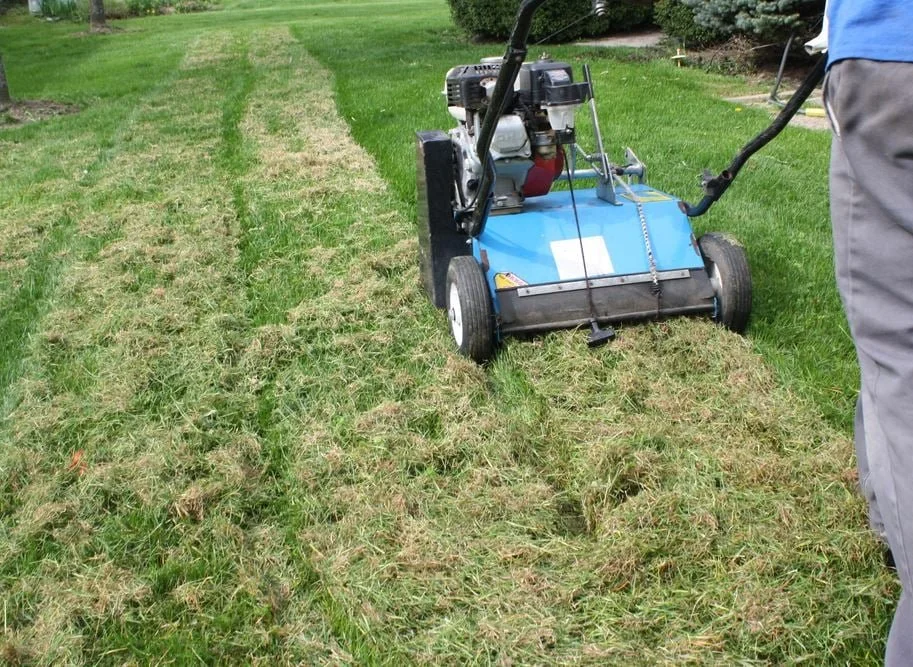
Dethatching can make the lawn look rough at first because dead material is being pulled out of the turf. That is normal. The goal is not to make the lawn look perfect during the process. The goal is to remove the buildup that is blocking the lawn.
After dethatching, the lawn may need cleanup, watering, mowing adjustments, overseeding, fertilizer, or aeration depending on the condition of the grass and soil.
Aftercare Basics
- Expect dead material to be pulled up
- The lawn may look thinner at first
- Cleanup may be needed after dethatching
- Watering may help the lawn recover
- Overseeding may help fill weak areas
- Aeration may help if soil compaction is also present
When Dethatching Is Not Enough
Dethatching only handles surface buildup. It does not fix compacted soil, poor grading, drainage problems, severe weed pressure, or lawns that are too damaged to recover with basic services.
Evo Lawn & Landscape keeps the recommendation practical. If the lawn needs dethatching only, that is the recommendation. If the lawn also needs aeration, overseeding, fertilizer, or a larger repair plan, that should be clear before the work starts.
Other Services To Consider
- Lawn aeration for compacted soil
- Overseeding for thin or patchy grass
- Starter fertilizer for new seed support
- Spring clean up before lawn improvement
- Weekly lawn maintenance after recovery
- Full lawn renovation for severe damage
For ongoing care after the lawn recovers, visit the weekly lawn maintenance in Gurnee, IL page.
Local Lawn Dethatching In Gurnee, IL
Evo Lawn & Landscape provides lawn dethatching for residential properties throughout Gurnee, IL. Local lawns can struggle with dead grass buildup after winter, heavy mowing seasons, summer stress, and weak turf that needs better preparation before new growth.
Service is available for homes near Hunt Club Park, Viking Park, Gurnee Mills, Warren Township High School, Grand Avenue, Washington Street, Hunt Club Road, Greenleaf Street, and residential neighborhoods throughout Gurnee.
Gurnee Lawns We Help Improve
- Residential lawns in Gurnee, IL
- Lawns with dead grass buildup
- Thin lawns that need better preparation
- Spongy lawns with surface buildup
- Patchy lawns preparing for overseeding
- Lawns that need a seasonal reset
- Properties needing practical lawn improvement
What Affects Dethatching Pricing
Lawn dethatching pricing depends on lawn size, thatch thickness, lawn condition, cleanup needs, access, and whether overseeding, aeration, starter fertilizer, or debris cleanup is added.
A light dethatching job is not the same as a lawn with heavy buildup that needs cleanup and follow up seeding. Evo Lawn & Landscape quotes based on the actual work needed for the property.
Pricing Factors
- Lawn size and service area
- Amount of dead grass buildup
- How thick or matted the thatch layer is
- Cleanup needs after dethatching
- Need for overseeding after service
- Need for aeration if soil is compacted
- Backyard access and property layout
Why Gurnee Homeowners Choose Evo Lawn & Landscape
Homeowners do not need someone to run a machine over the lawn without explaining what is actually wrong. They need a clear answer on whether the lawn has thatch buildup, soil compaction, thin grass, or a combination of problems.
Evo Lawn & Landscape focuses on practical residential lawn care in Gurnee. For dethatching, that means clear quotes, honest recommendations, and service options that match what the lawn actually needs.
What We Focus On
- Residential lawn dethatching in Gurnee
- Dead grass and thatch buildup removal
- Better lawn preparation before overseeding
- Clear difference between dethatching and aeration
- Practical follow up recommendations
- Property based quotes
Honest Lawn Review
Evo Lawn & Landscape looks at whether the lawn actually needs dethatching before recommending it.
Better Prep For Growth
Removing surface buildup helps the lawn breathe and can improve preparation for overseeding or fertilizer.
Simple Quote Process
Submit your property details through the form and Evo Lawn & Landscape will review the dethatching option that makes sense for your lawn.
Gurnee Lawn Dethatching FAQs
Does Evo Lawn & Landscape provide lawn dethatching service in Gurnee, IL?
Yes. Evo Lawn & Landscape provides lawn dethatching service in Gurnee, IL for residential lawns with dead grass buildup, thick thatch, spongy turf, and weak growth.
What is lawn dethatching?
Lawn dethatching removes the layer of dead grass, stems, and organic buildup that can sit between the grass and the soil. When that layer gets too thick, it can block water, air, nutrients, and seed from reaching the soil properly.
How do I know if my lawn needs dethatching?
Your lawn may need dethatching if it feels spongy, has a thick brown layer under the grass, struggles to absorb water, or seed has trouble reaching the soil.
Is dethatching the same as aeration?
No. Dethatching removes dead grass buildup from the surface layer. Aeration pulls soil plugs from the ground to help with compaction and root zone access.
Should I overseed after dethatching?
Overseeding after dethatching can be a smart option when the lawn is thin or patchy because the seed has a better chance to reach the soil after buildup is removed.
Will dethatching damage my lawn?
Dethatching can make the lawn look rough at first because dead material is being pulled up. When done at the right time and for the right lawn, it can help improve lawn conditions.
What is the best time to dethatch a lawn in Gurnee?
Spring or early fall can be good times for dethatching cool season lawns in Gurnee, depending on lawn condition, weather, and whether overseeding or aeration is being added.
Can dethatching help new grass seed grow?
Yes. If thatch buildup is blocking the soil, dethatching can help improve seed to soil contact before overseeding.
How do I request a lawn dethatching quote in Gurnee?
Fill out the quote form at the top of this page with your name, Gurnee address, phone number, email, selected services, and lawn details. Evo Lawn & Landscape will review it and follow up with the next step.